Renaissance Revival
Sèvres
Three-Piece Clock Garniture
Cobalt Blue Porcelain and Ormolu
France
Circa 1850s
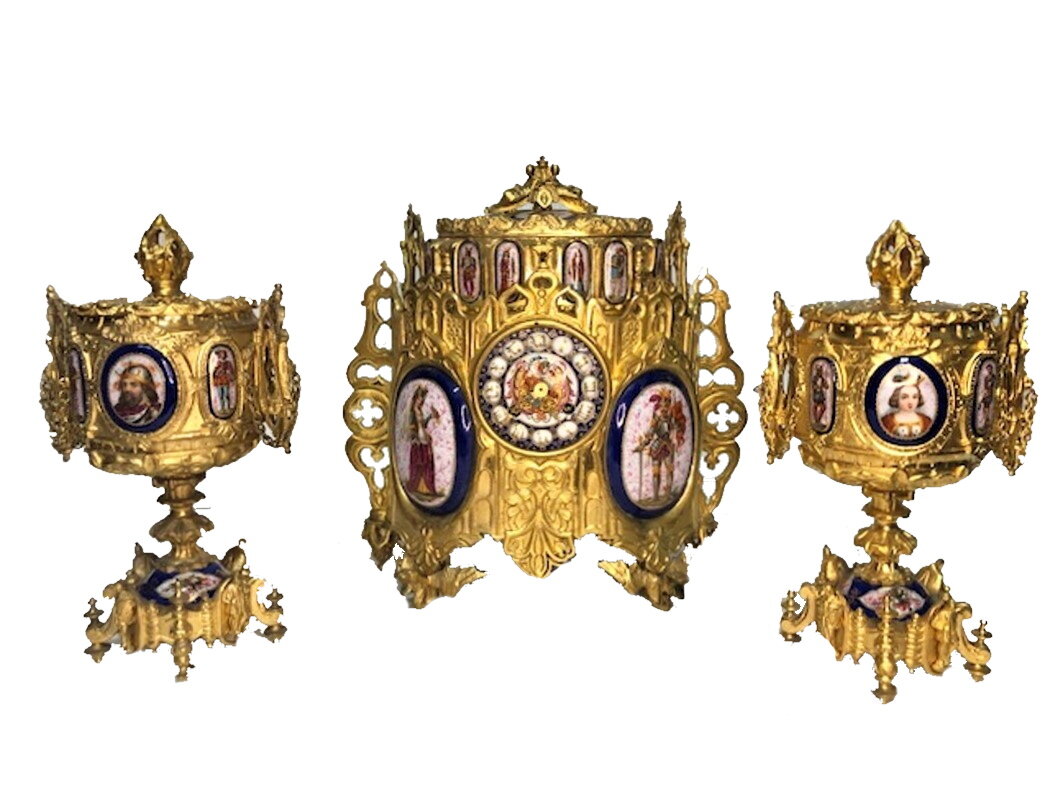
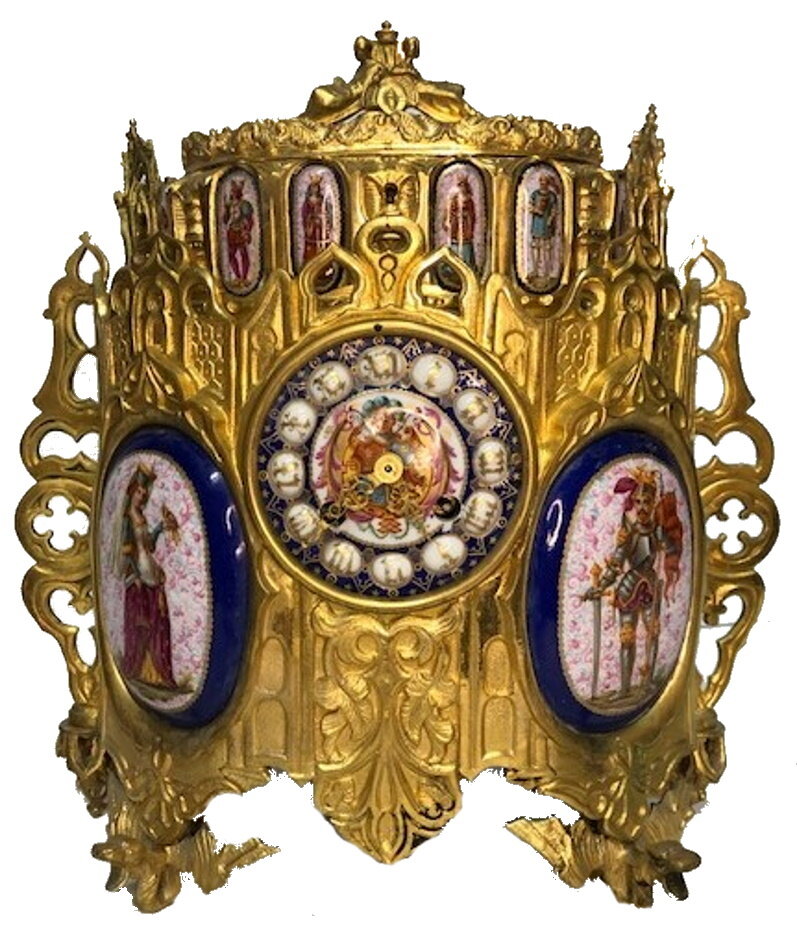
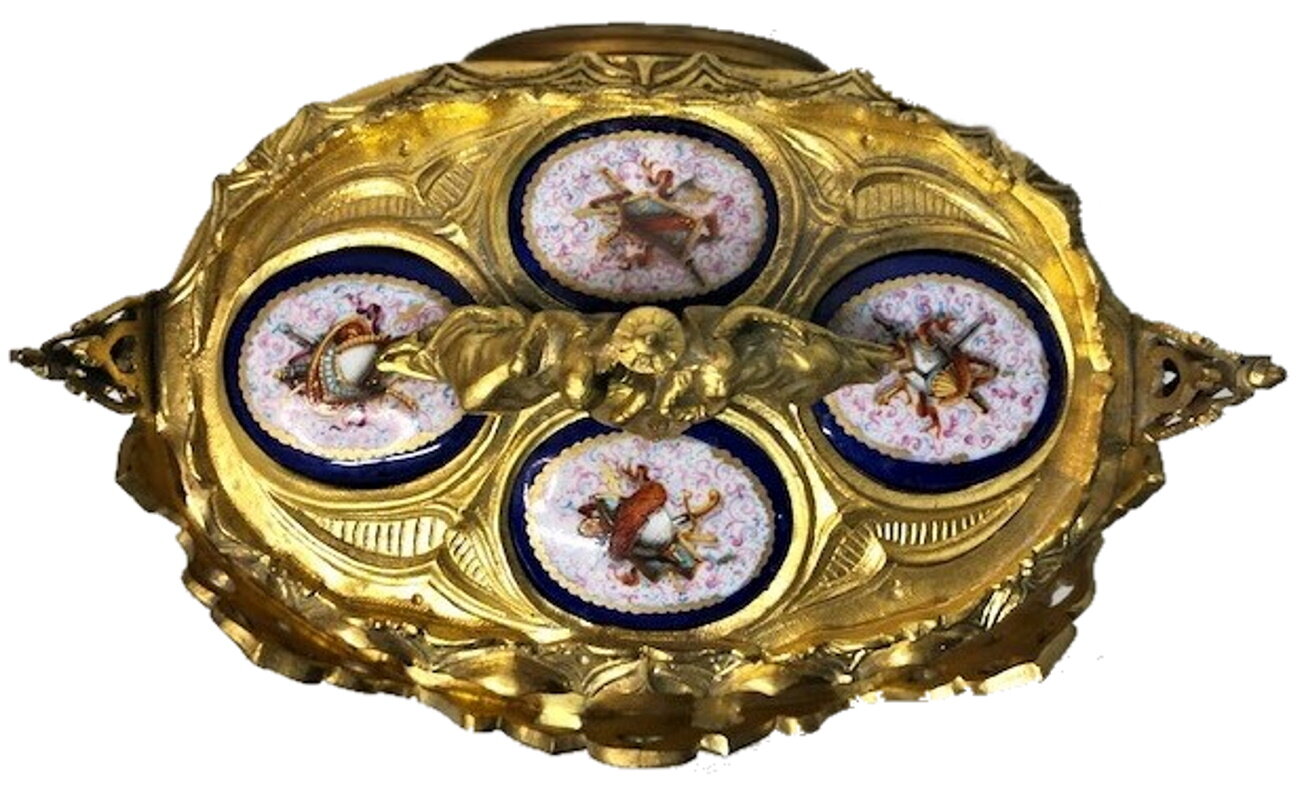
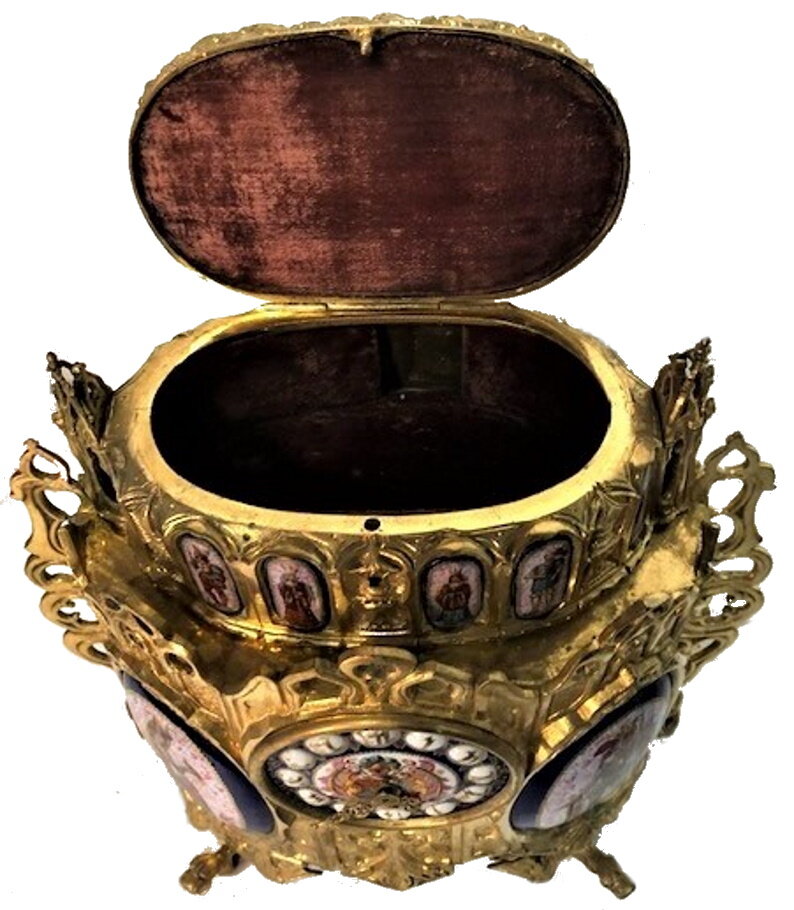
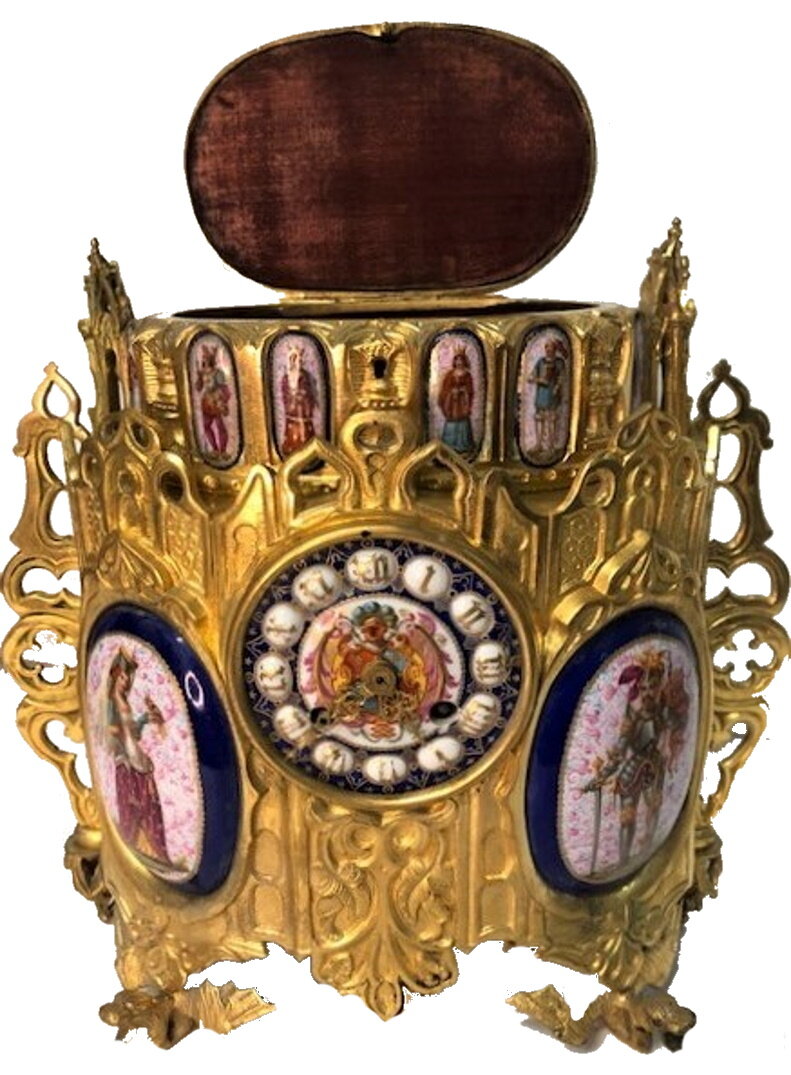
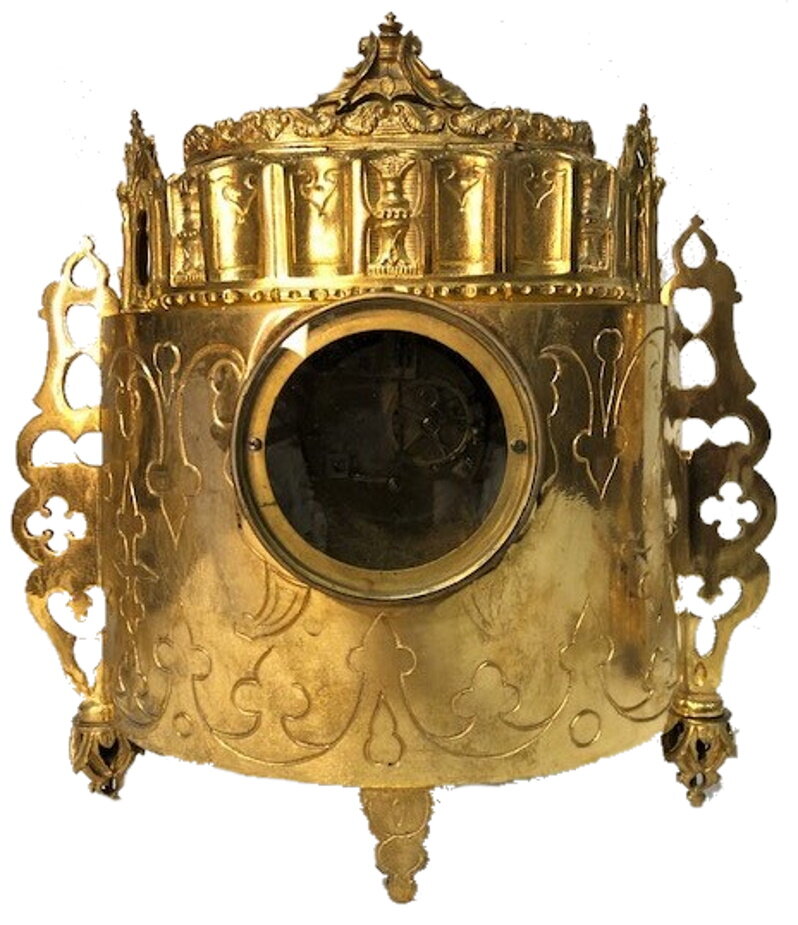
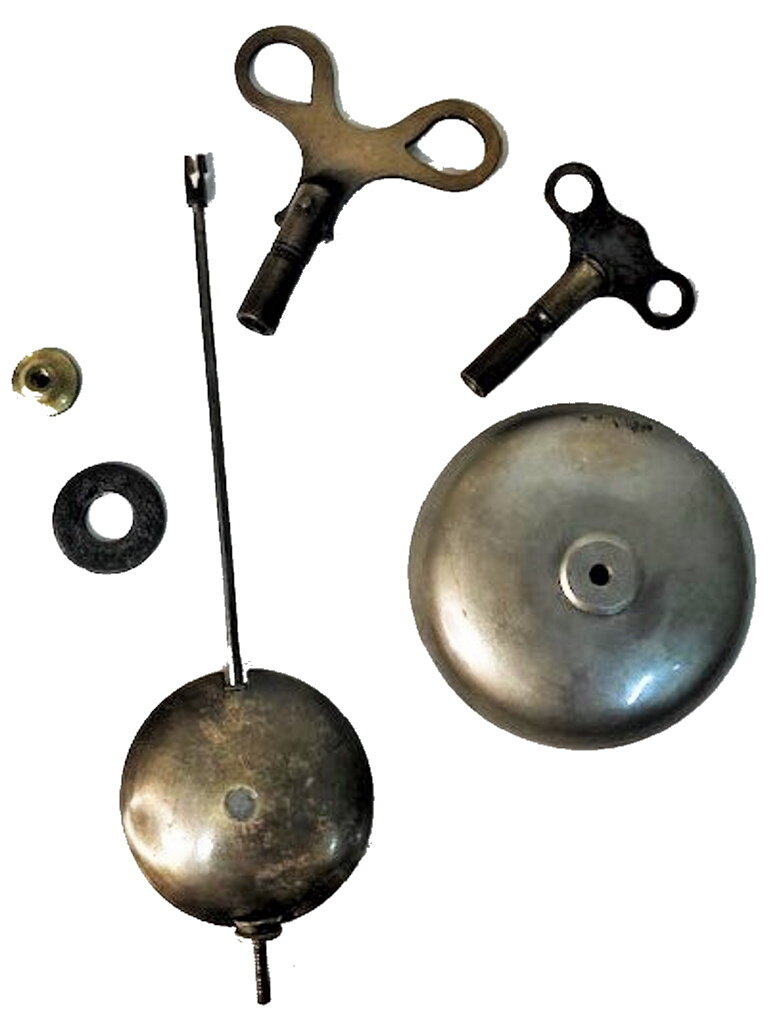
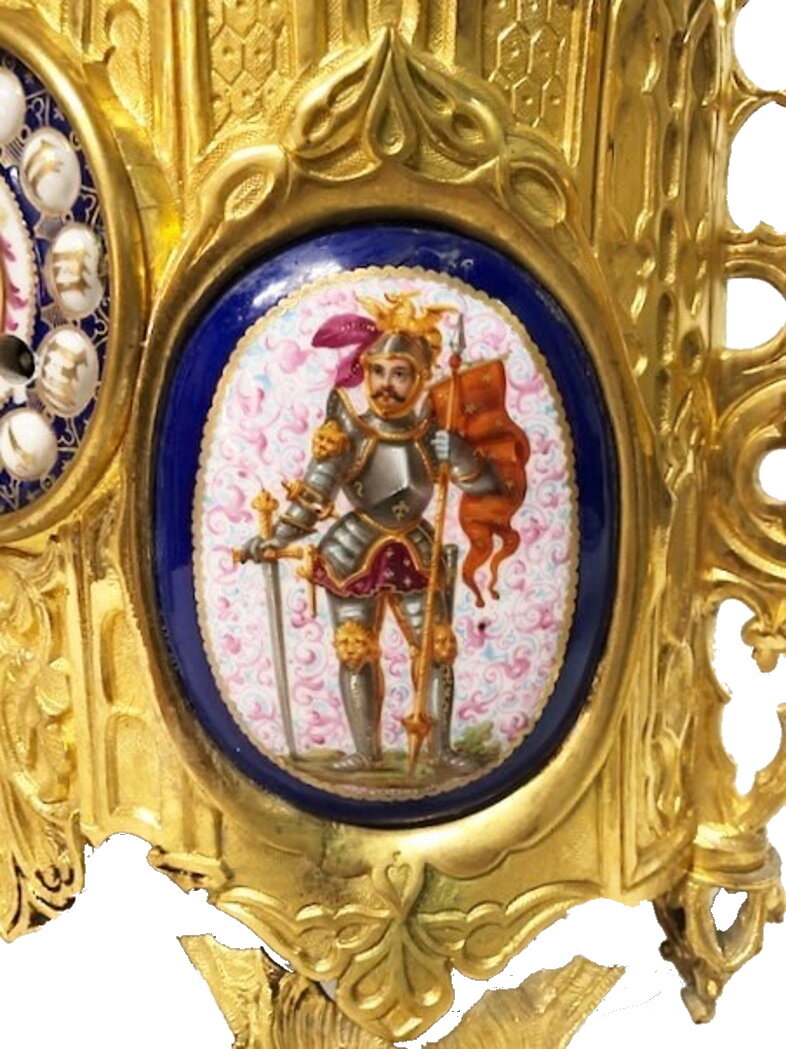
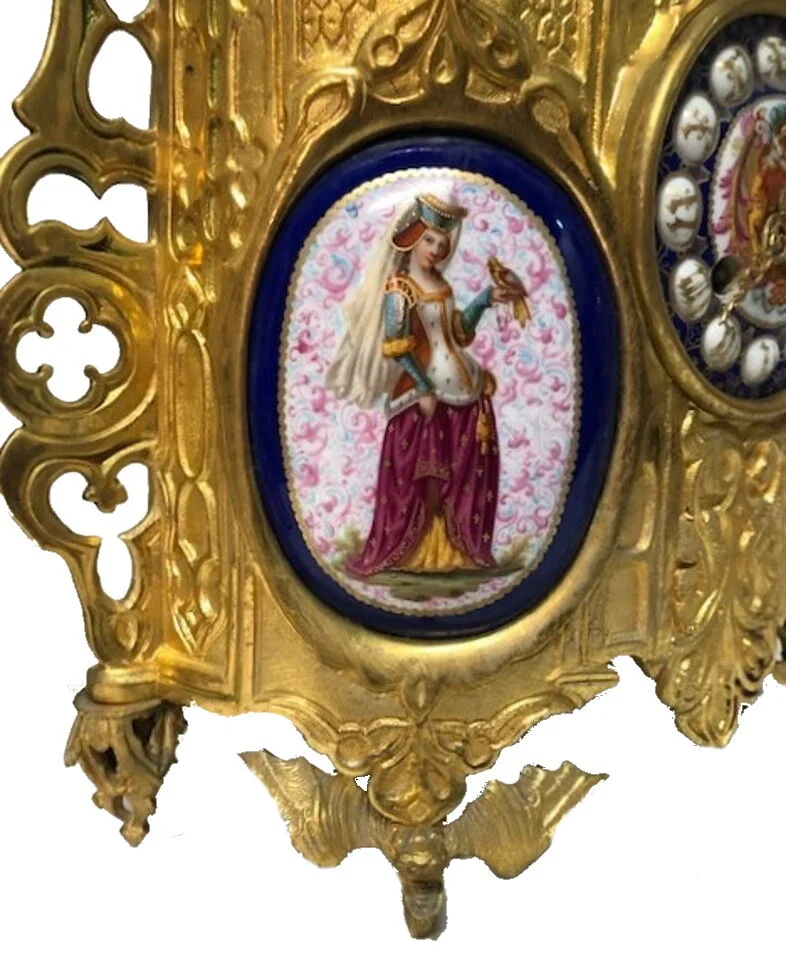
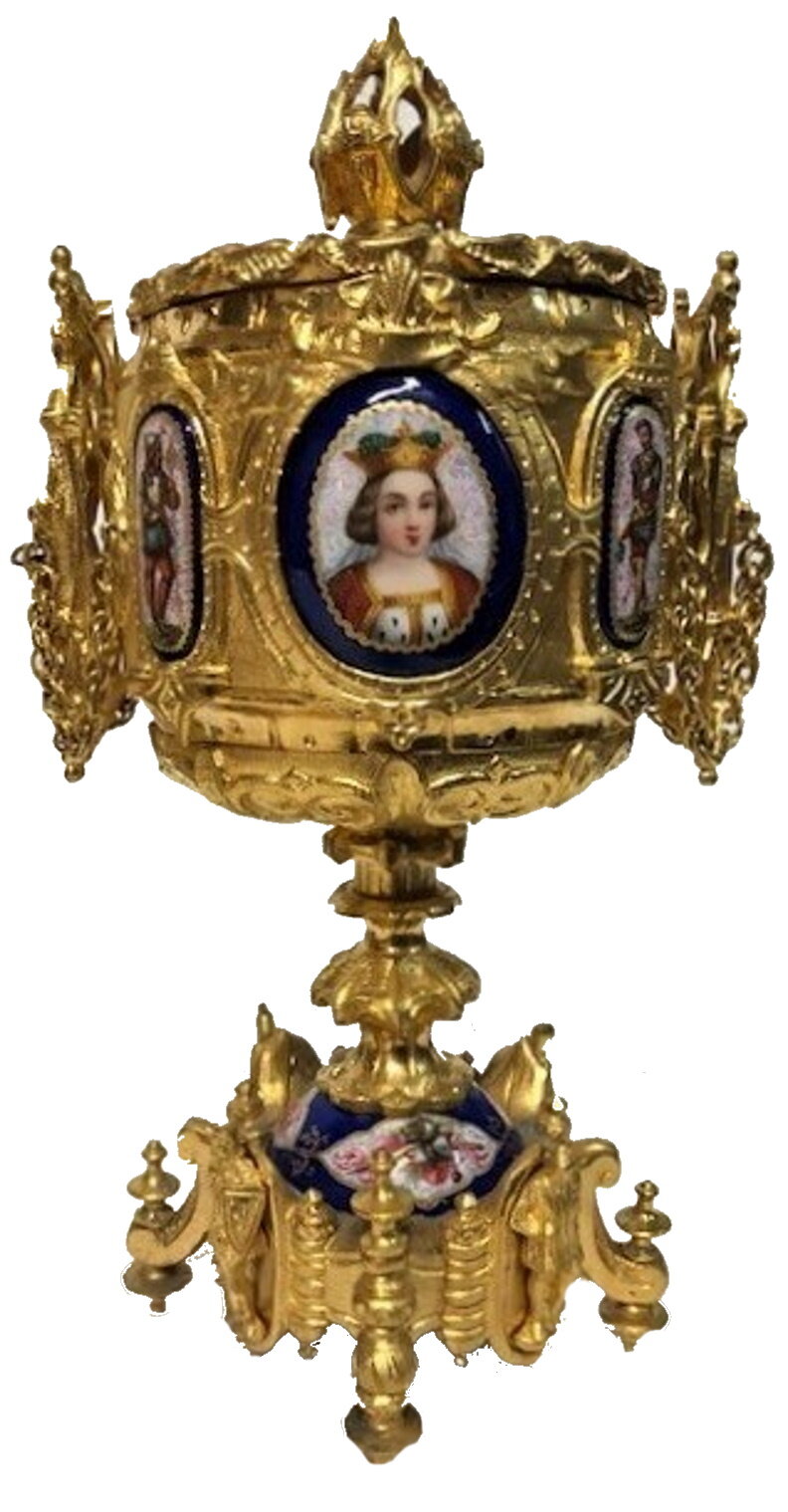
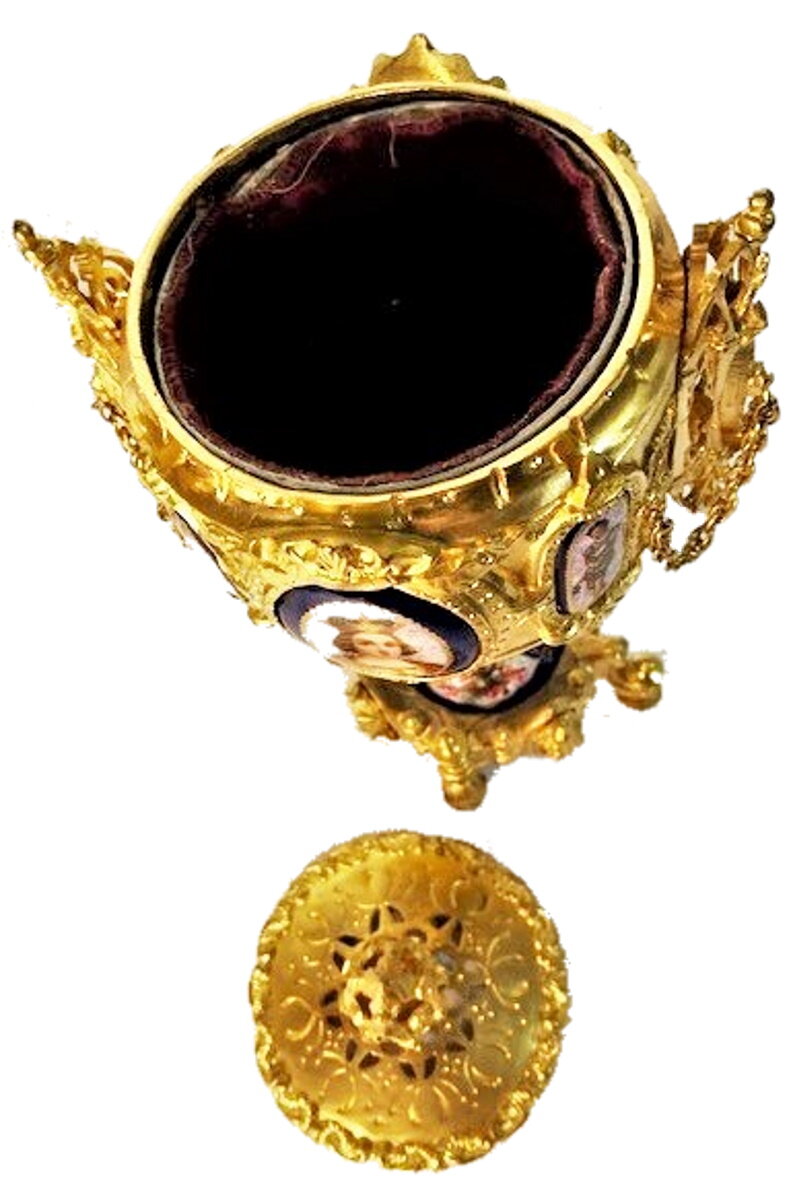
An elegant and exceptionally decorative French Renaissance Revival three-piece clock garniture, executed in the celebrated Sèvres style and dating to the mid-20th century, circa 1950s. The set comprises a central mantel clock flanked by a pair of covered chalice-form boxes, each lavishly mounted in finely cast and gilded ormolu.
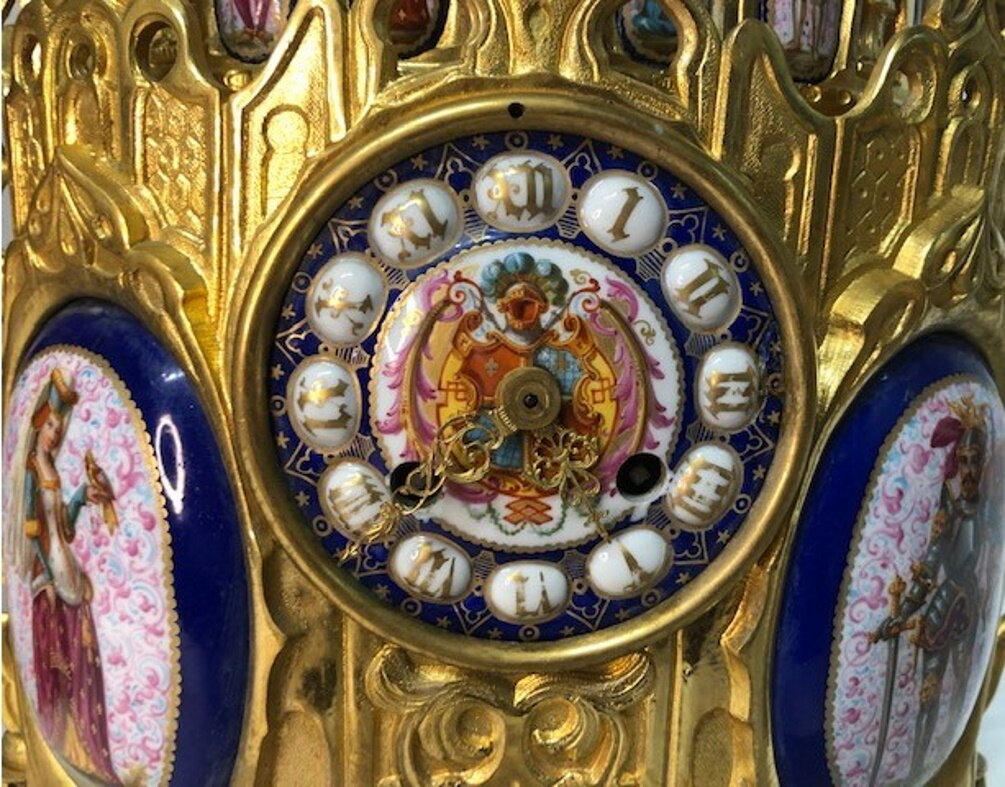
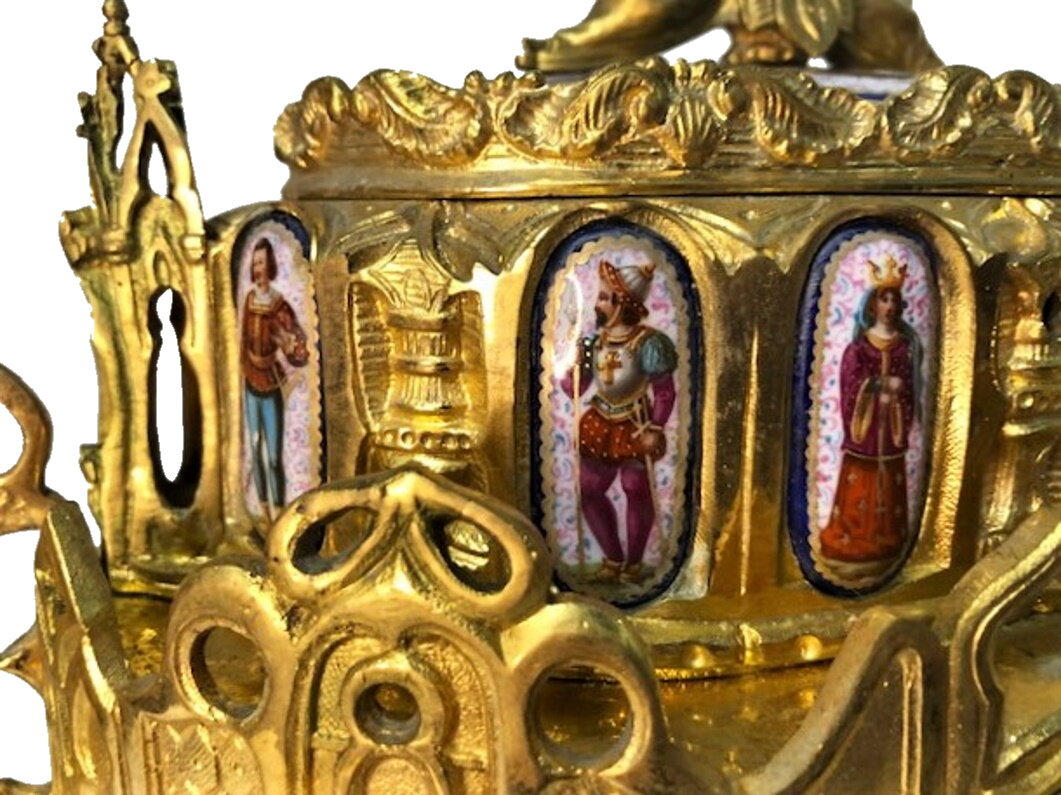
The richly ornamented clock case displays an elaborate architectural silhouette inspired by Renaissance design, adorned with scrolling foliage, pierced strapwork, and intricate floral motifs. The central porcelain dial is framed by a magnificent gilt surround and features classic Roman numerals enclosed within a finely painted floral chapter ring. Surrounding the dial are numerous hand-painted cobalt blue porcelain medallions depicting historical figures of medieval French nobility, each rendered with remarkable delicacy and vibrant enamel colors. Additional porcelain plaques embellish the upper frieze and side panels, creating a harmonious balance between sculptural bronze work and refined porcelain painting.
The accompanying covered chalice-form boxes echo the same opulent aesthetic. Each stands upon an ornate tripod base with scrolling acanthus feet and is crowned by a hinged domed bonnet surmounted by a flame finial. Oval and circular Sèvres-style cobalt blue porcelain reserves, hand-painted with noble portraits, decorate each vessel, while the richly chased ormolu mounts frame the porcelain with exceptional elegance and depth. The hinged covers open to reveal concealed compartments, combining decorative beauty with practical function.
Inspired by the luxurious decorative arts of the French Renaissance and the celebrated porcelain traditions of Sèvres, this striking garniture reflects the refined craftsmanship and historical revivalism that characterized high-quality French decorative objects of the mid-20th century. Equally suited for display on a mantel, console, or library cabinet, the ensemble offers a sophisticated blend of sculpture, porcelain painting, and gilded bronze work.
A rare and highly decorative French garniture of impressive presence, ideal for collectors of fine European decorative arts, Sèvres porcelain, and Renaissance Revival furnishings.
Dimensions:
Clock: Height: 12.75 in. (32.4 cm); Width: 12 in. (30.5 cm); Depth: 7.25 in. (18.4 cm)
Chalice Boxes (each): Height: 11.25 in. (28.6 cm); Width: 5.75 in. (14.6 cm); Depth: 4.5 in. (11.4 cm)
$6,900
Art Deco
Zenith Marble Desk Clock
Switzerland, ca. 1920’s
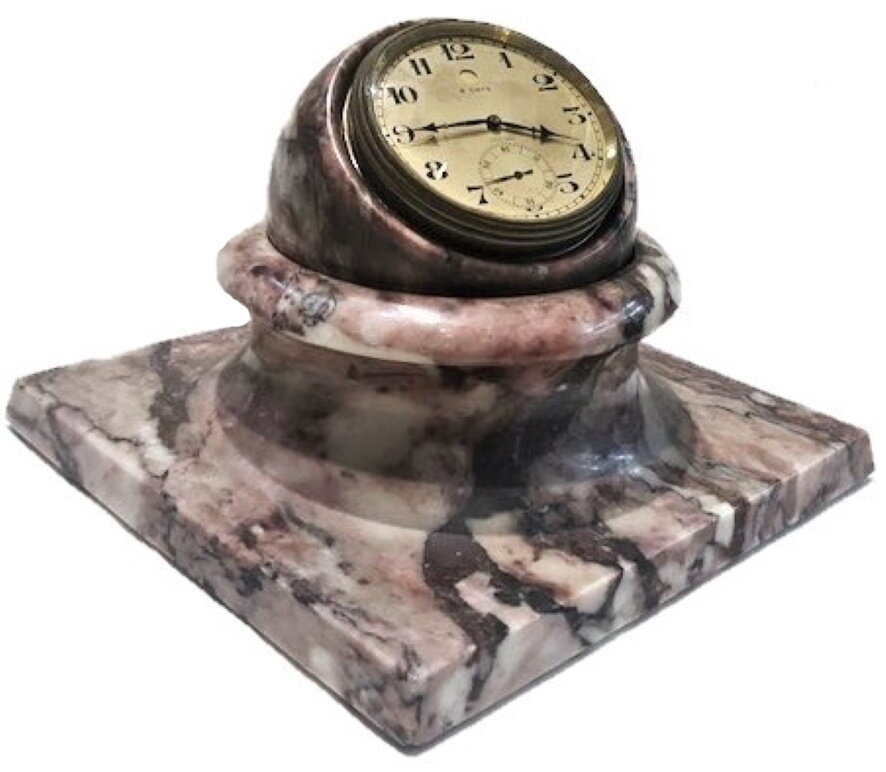
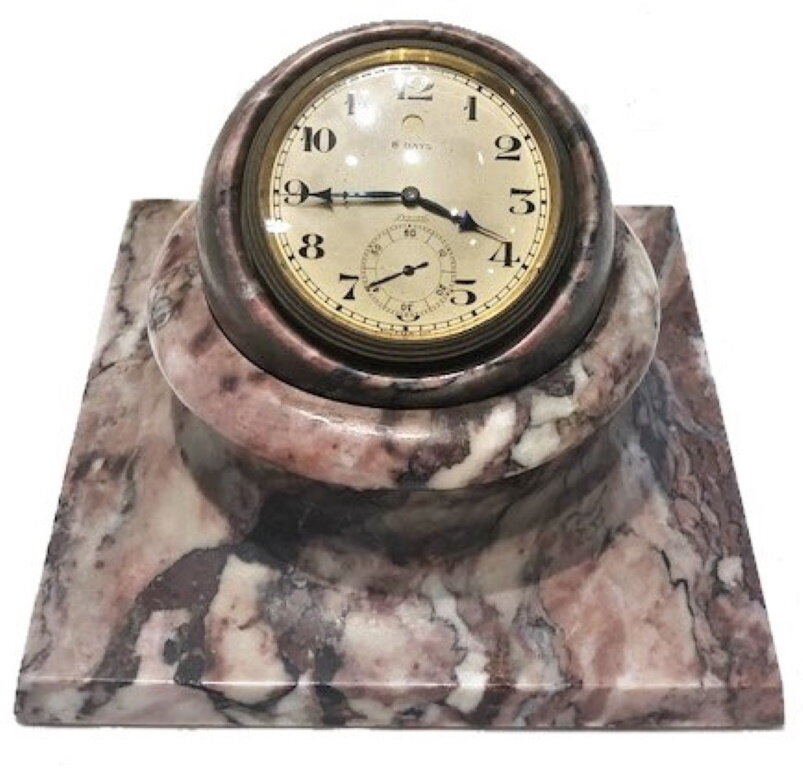
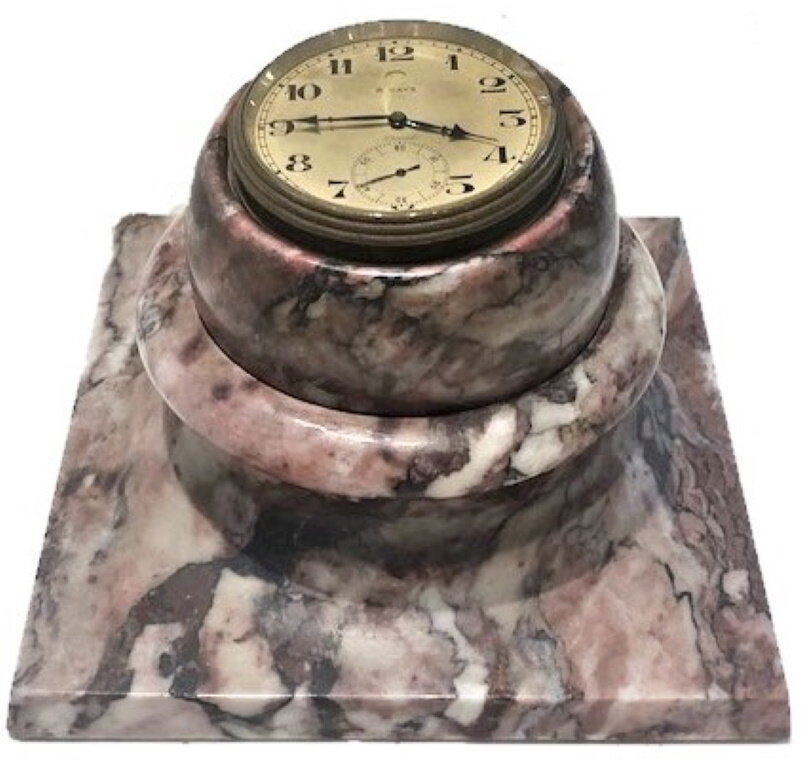
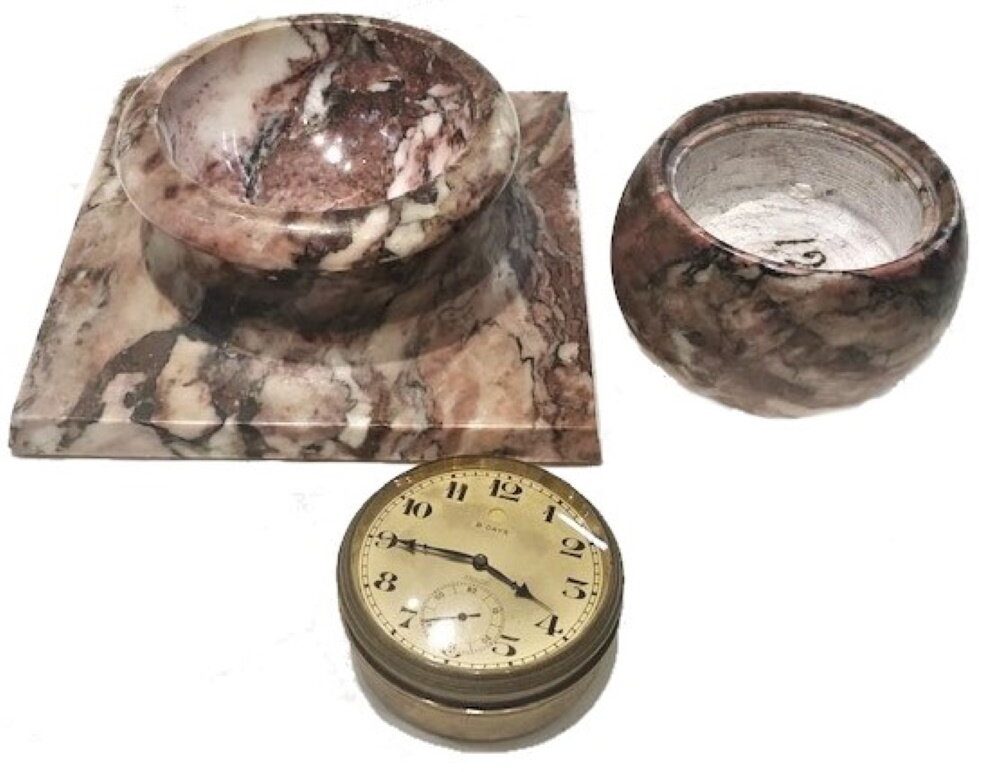
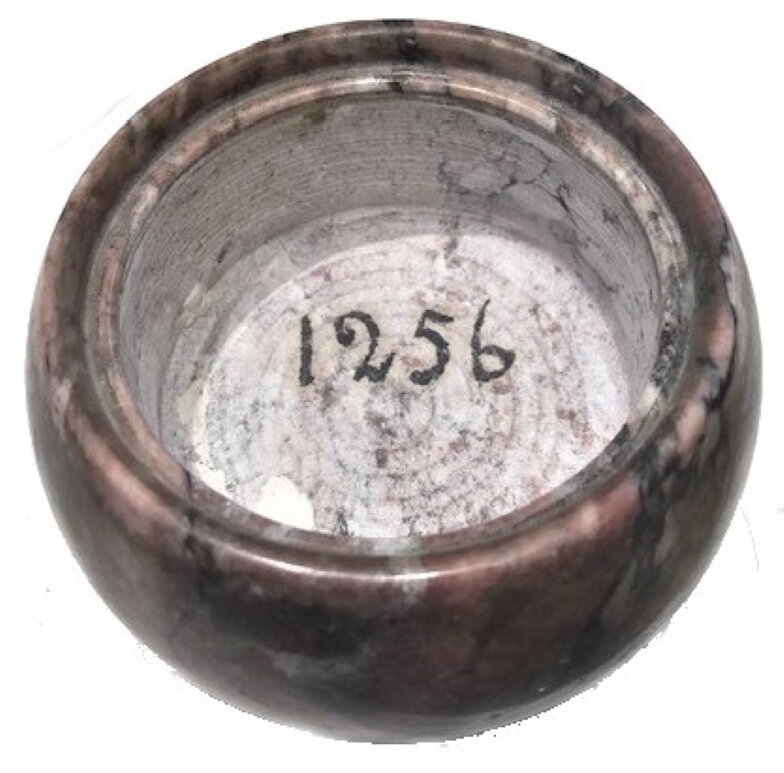
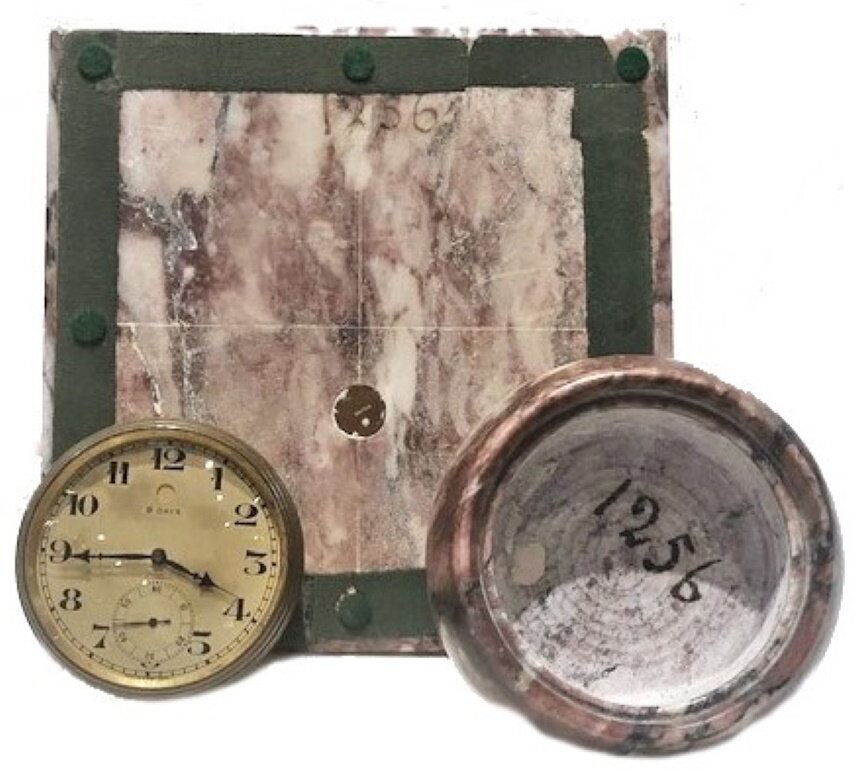
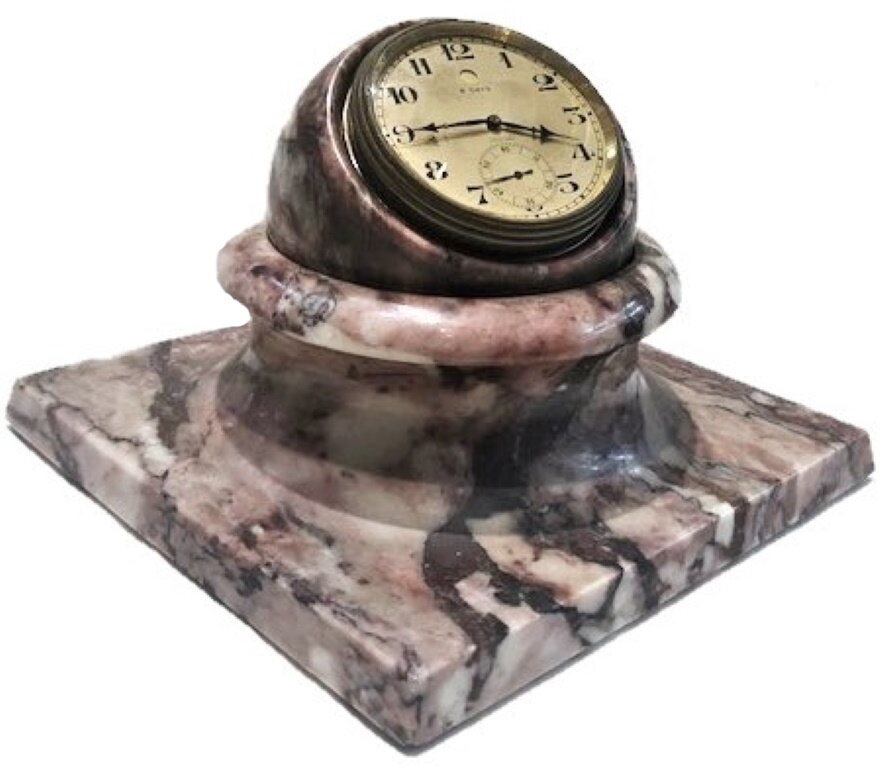
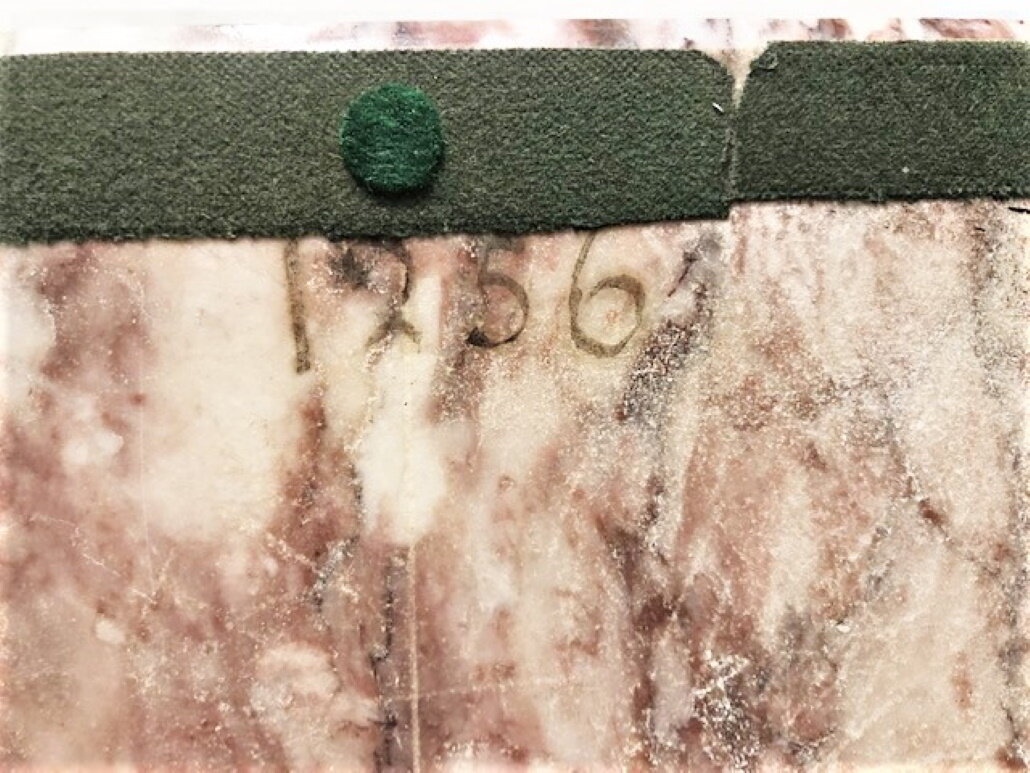
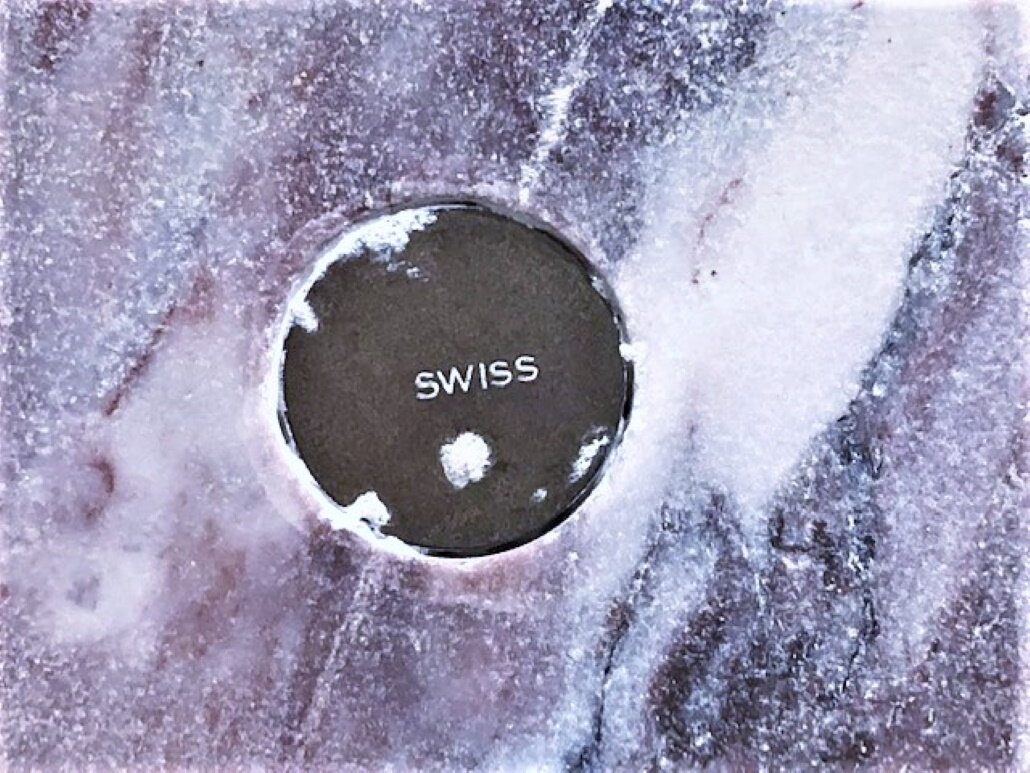
Dimensions:
Height: 5-1/2 inches Width: 7-7/16 inches Depth: 7-7/16 inches
Zenith SA is a Swiss luxury watchmaker. The company established in Le Locle, in the canton of Neushatel, in 1865; by Georges Favre-Jacot, who was 22 at the time. Zenith was purchased by LVMH in November 1999, becoming one of several brands in its watch and jewelry division, which includes also TAG Heuer and Hublot. Zenith is one of the Swiss watch manufacturers that still produce their own movements in-house.
George Favre-Jacot (1843 – 1917) was an apprentice within the watchmaking industry while still a youth. Later in life, Favre-Jacot had commissioned famous architect Le Corbusier to build a house for himself in Le Locle. He was also closely involved with another prominent architect of the era, Alfonse Laverriere, the relationship with whom was the source of influence upon the Werkbund movement. The two men collaborated with a shared artistic vision of the nature of production, to the extent to which they themselves somewhat reformed the artistic situation within francophone Switzerland at the time.
sold
ZENITH
Art Deco
Ladies' Bedside Clock
Cloisonné Enamel and Gilt Metal
Switzerland, 1920s
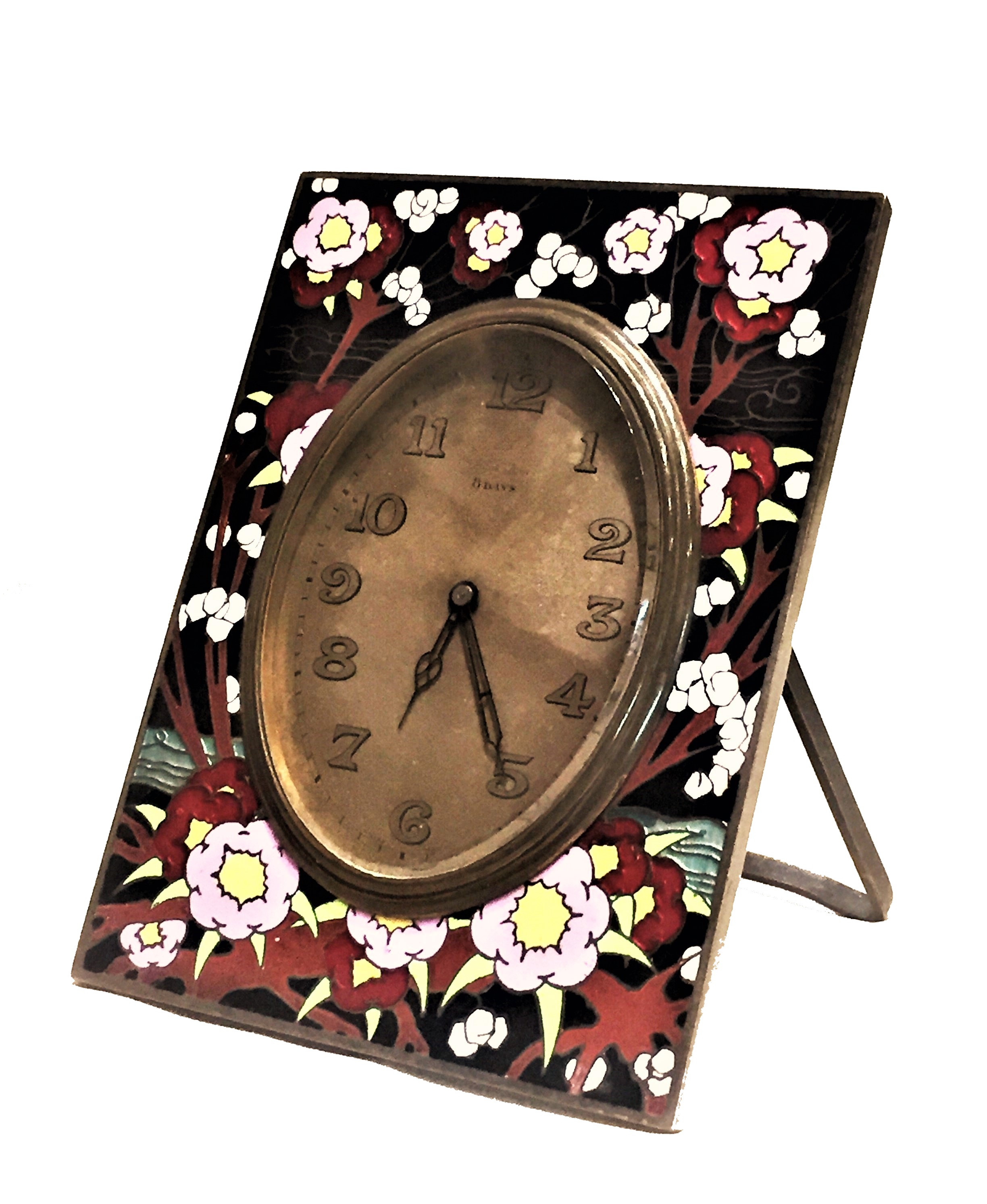
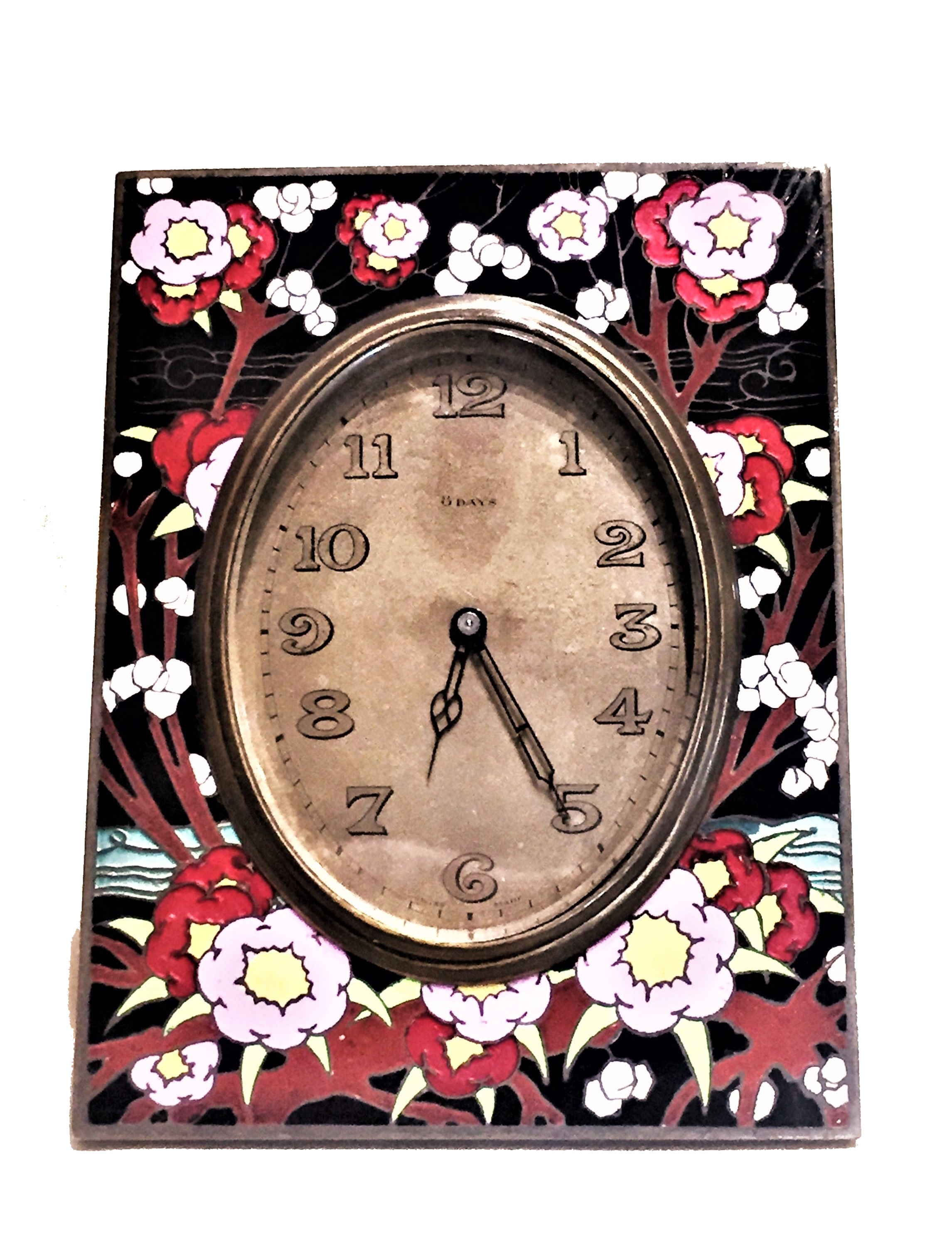
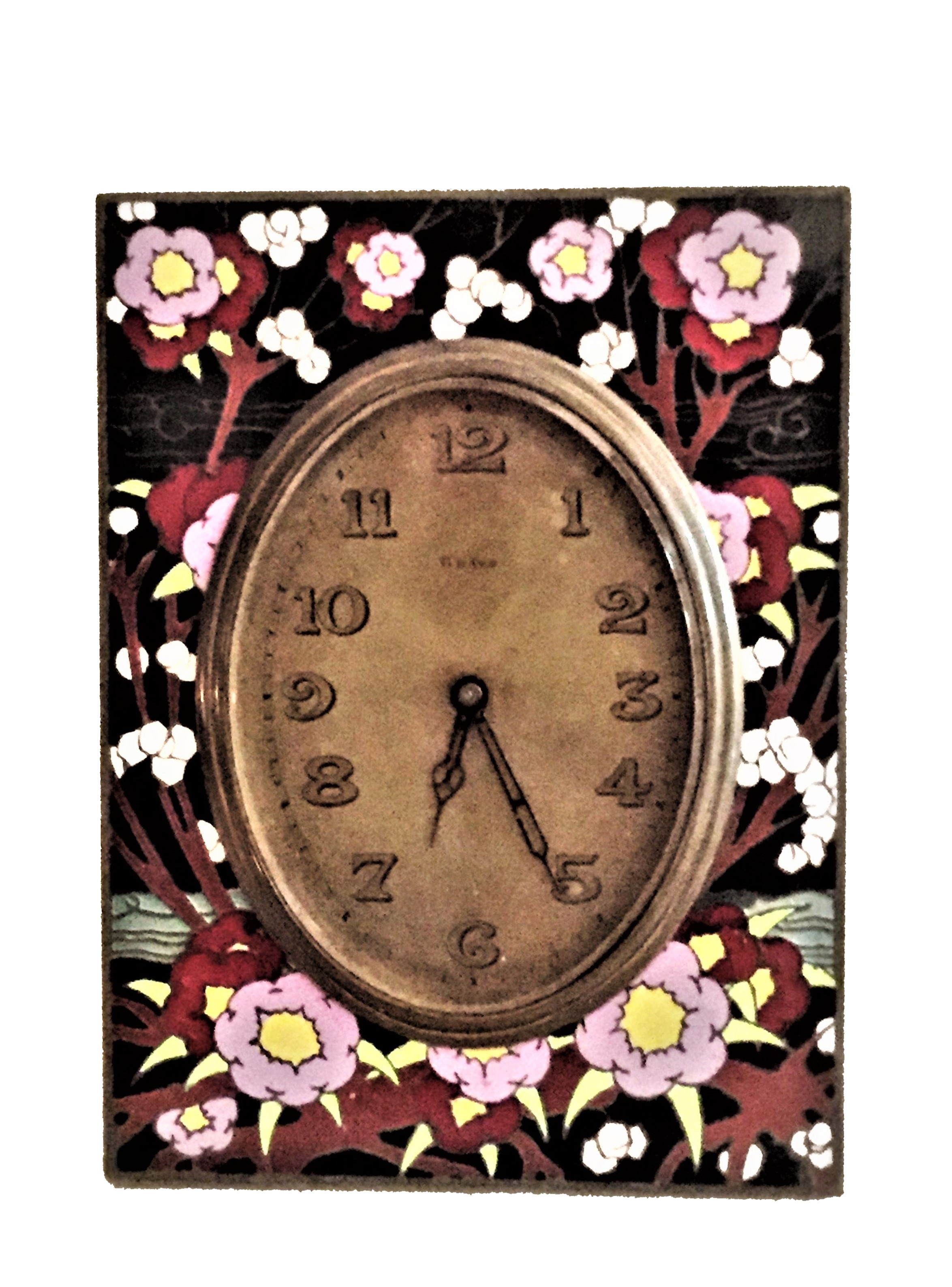
A charming and highly collectible Swiss Art Deco bedside clock by the renowned Zenith Watch Co., dating to the 1920s. Beautifully executed in gilt metal and richly decorated with vibrant cloisonné enamel, this elegant timepiece exemplifies the refined craftsmanship and sophisticated design that established Zenith as one of Switzerland's foremost horological manufacturers.
The rectangular easel-back case is ornamented with a striking floral composition in the Art Deco taste. Stylized blossoms in shades of crimson, pink, white, and pale yellow are meticulously rendered in cloisonné enamel against a deep black ground, while subtle green accents provide a harmonious contrast. The bold geometric arrangement and vivid palette are characteristic of the decorative arts of the 1920s, giving the clock both artistic presence and timeless elegance.
At the center is an oval gilt bezel enclosing a warm brass dial signed Zenith, with applied Arabic numerals and finely pierced black steel hands beneath its original crystal. The understated dial design beautifully complements the richly ornamented enamel surround, creating a balanced composition that is both decorative and highly legible.
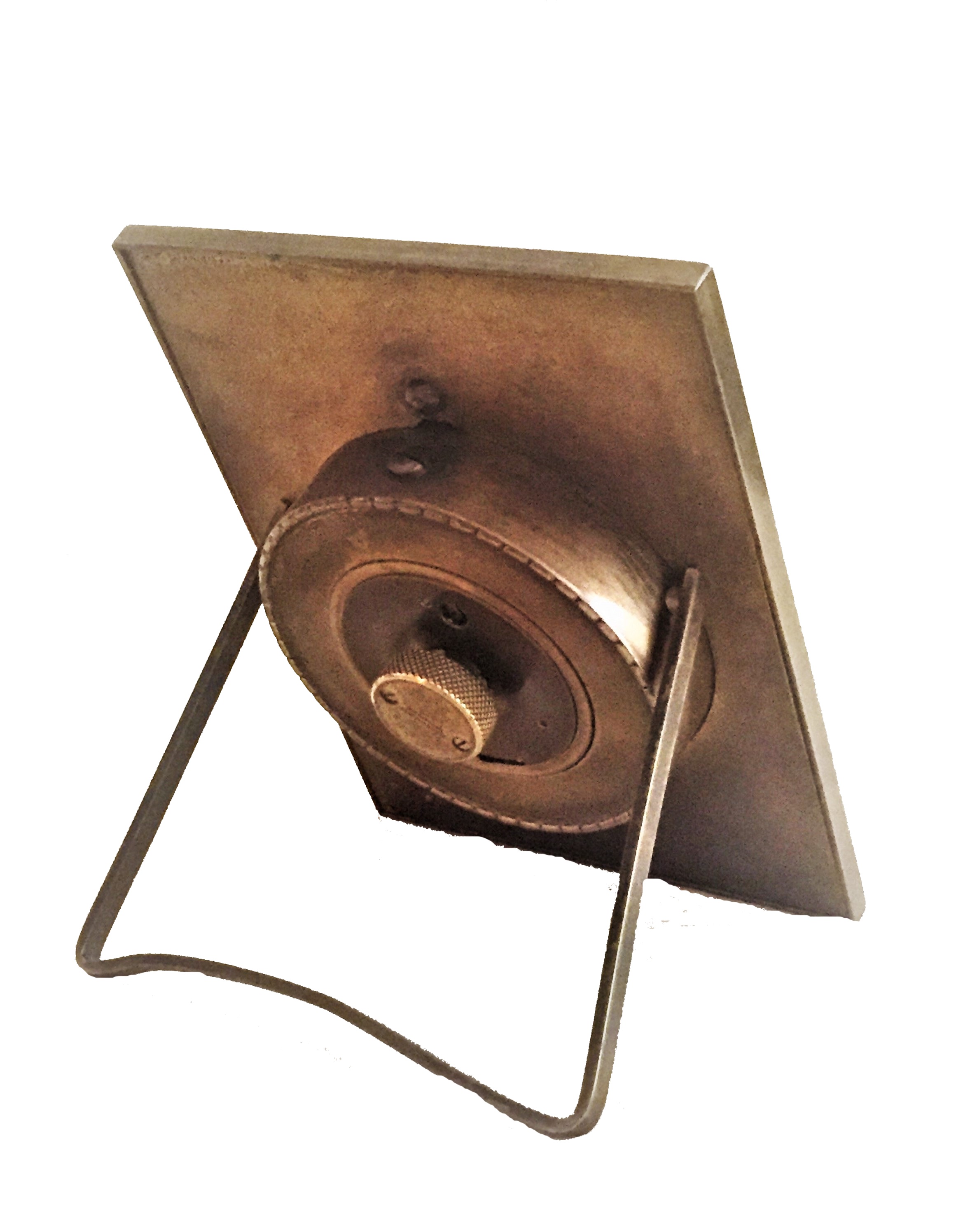
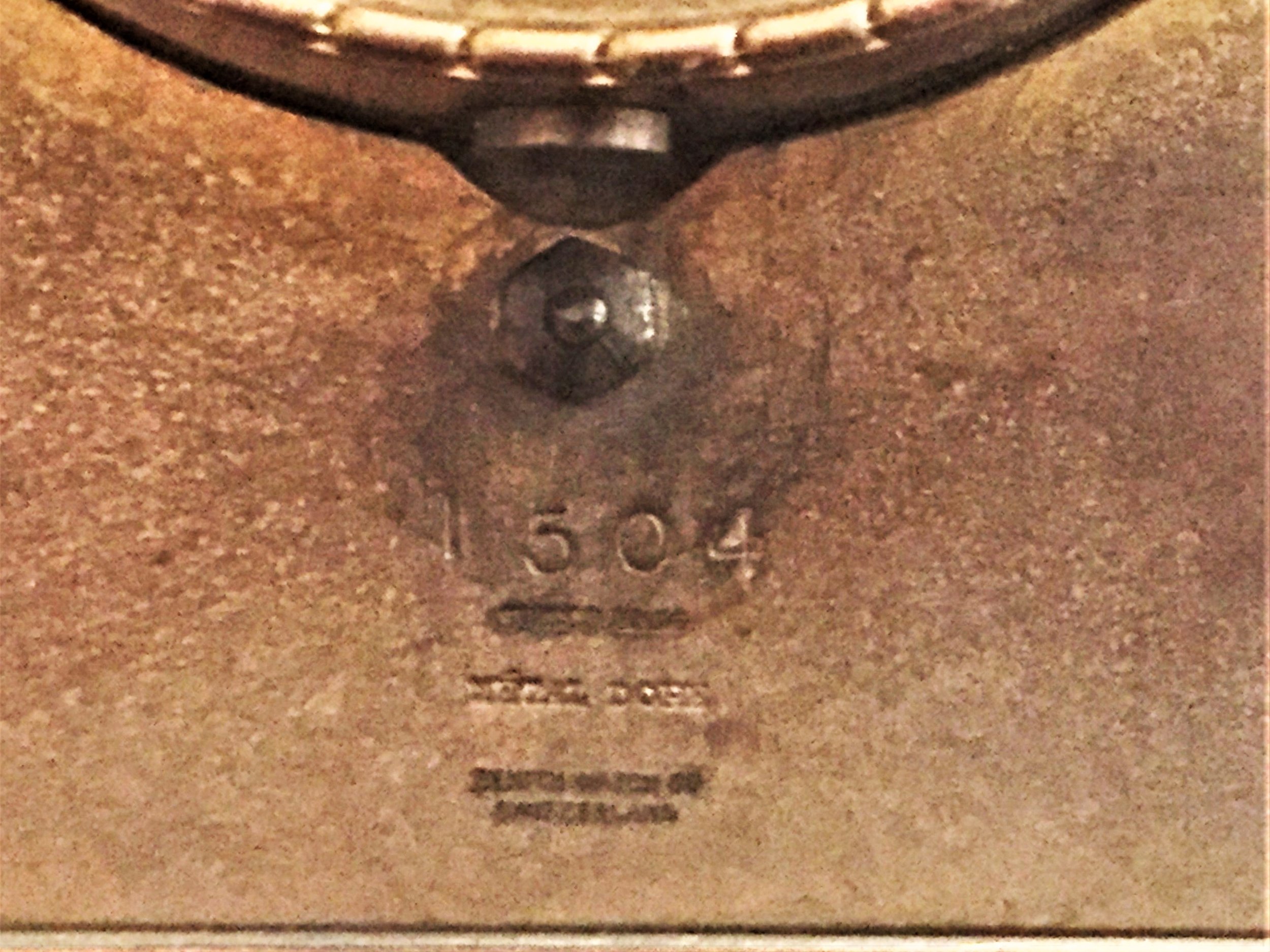
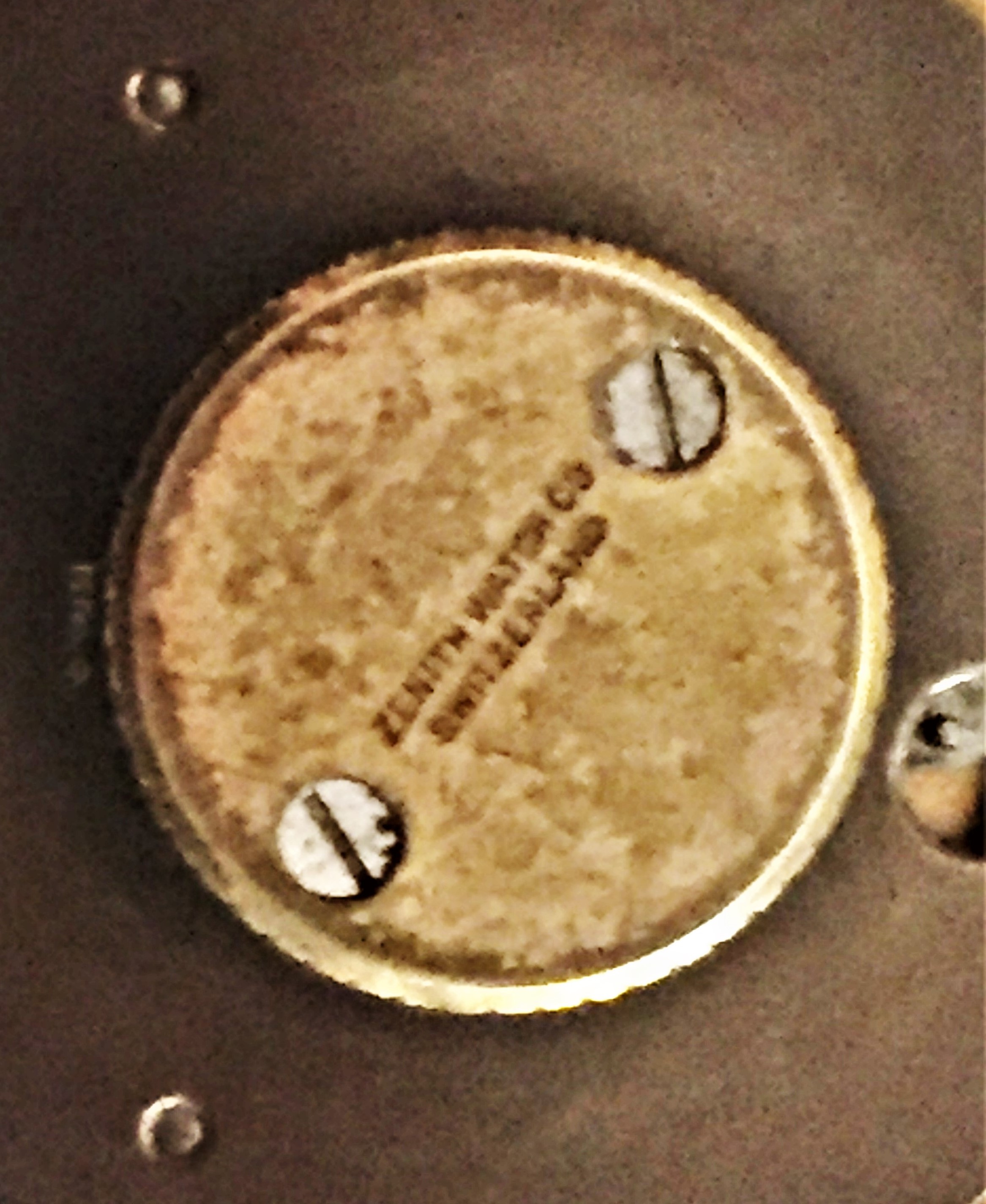
The reverse is fitted with a folding easel support, allowing the clock to stand securely on a bedside table, vanity, or writing desk. It houses a quality eight-day mechanical movement, remaining in good working order and reflecting the precision engineering for which Zenith has long been internationally admired.
Founded in 1865 by Georges Favre-Jacot in Le Locle, Switzerland, Zenith quickly earned a reputation for technical innovation and exceptional in-house movements. Today, the company remains one of the few Swiss manufactures producing its own movements and continues to be regarded as one of the world's premier luxury watchmakers.
Both functional and decorative, this delightful bedside clock is an exceptional example of Swiss Art Deco design and would make an elegant addition to a collection of fine clocks, cloisonné enamel objects, or early 20th-century decorative arts.
Dimensions
Height: 4 7/8 in. (12.4 cm)
Width: 3 1/2 in. (8.9 cm)
Condition
Eight-day mechanical movement in good working order. Minor wear consistent with age and careful use, with the cloisonné enamel remaining vibrant and well preserved.
$1,350
French Art Nouveau
Max Blondat
"L'amour non partagé"
Mantel Clock
Gilt Bronze
France, circa 1914
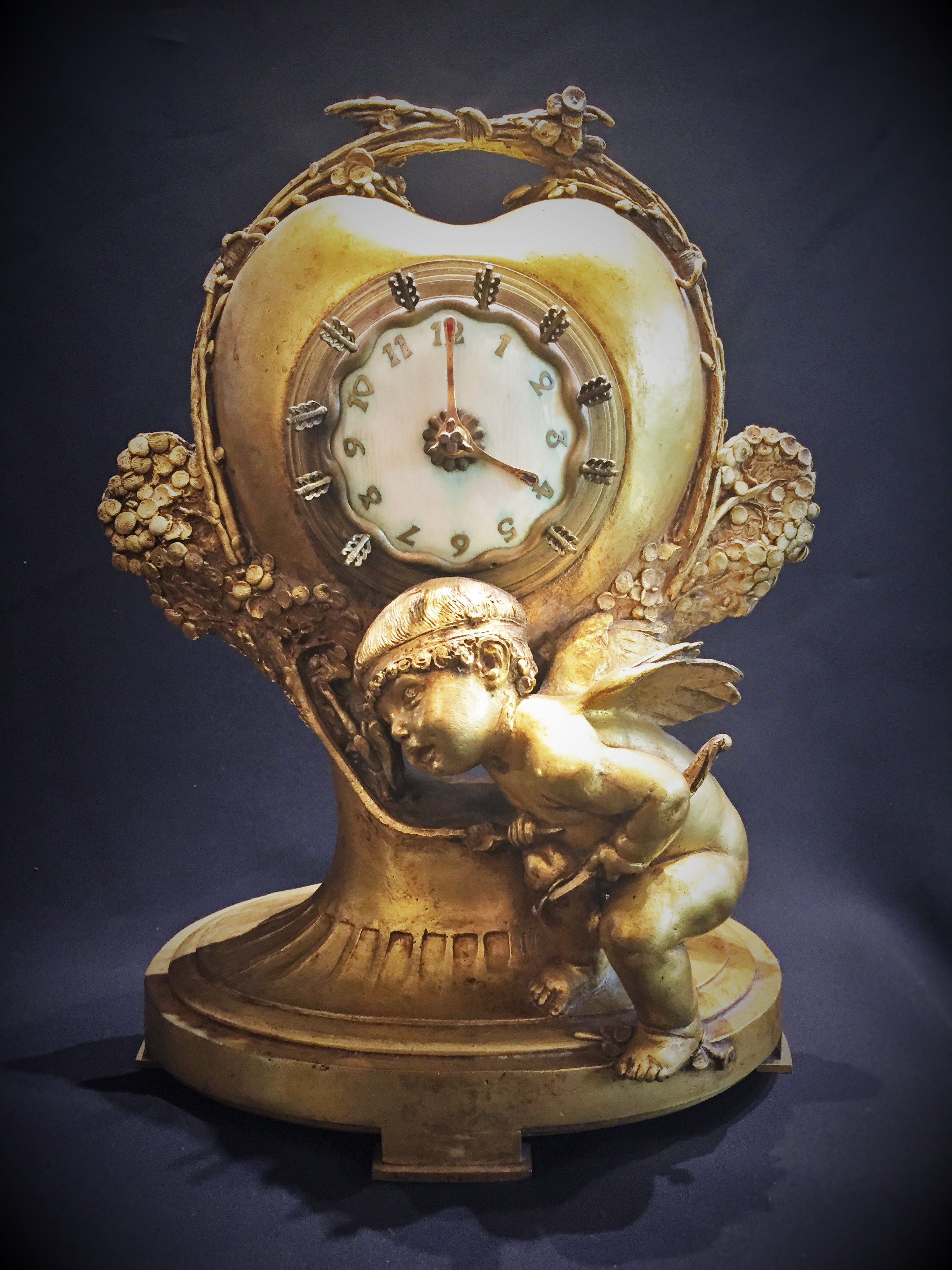
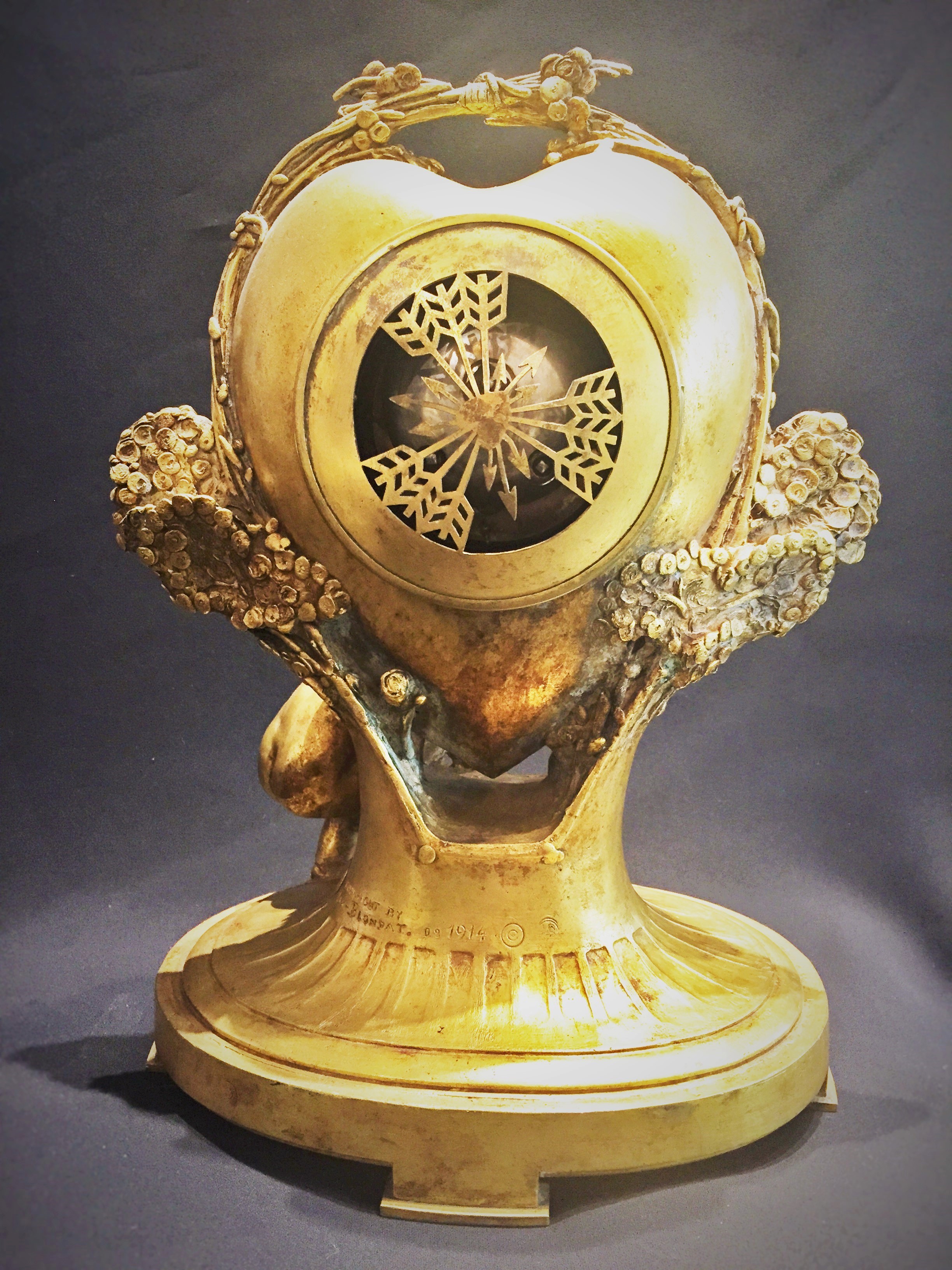

An exceptional and museum-quality Art Nouveau sculptural mantel clock by the celebrated French sculptor Max Blondat (1872–1926), titled L'Amour non partagé ("Unrequited Love"), cast in gilt bronze by the renowned Valsuani Foundry using the traditional cire perdue (lost-wax) process. Dated February 1914, this remarkable work represents the rare union of fine sculpture, decorative art, and precision horology.
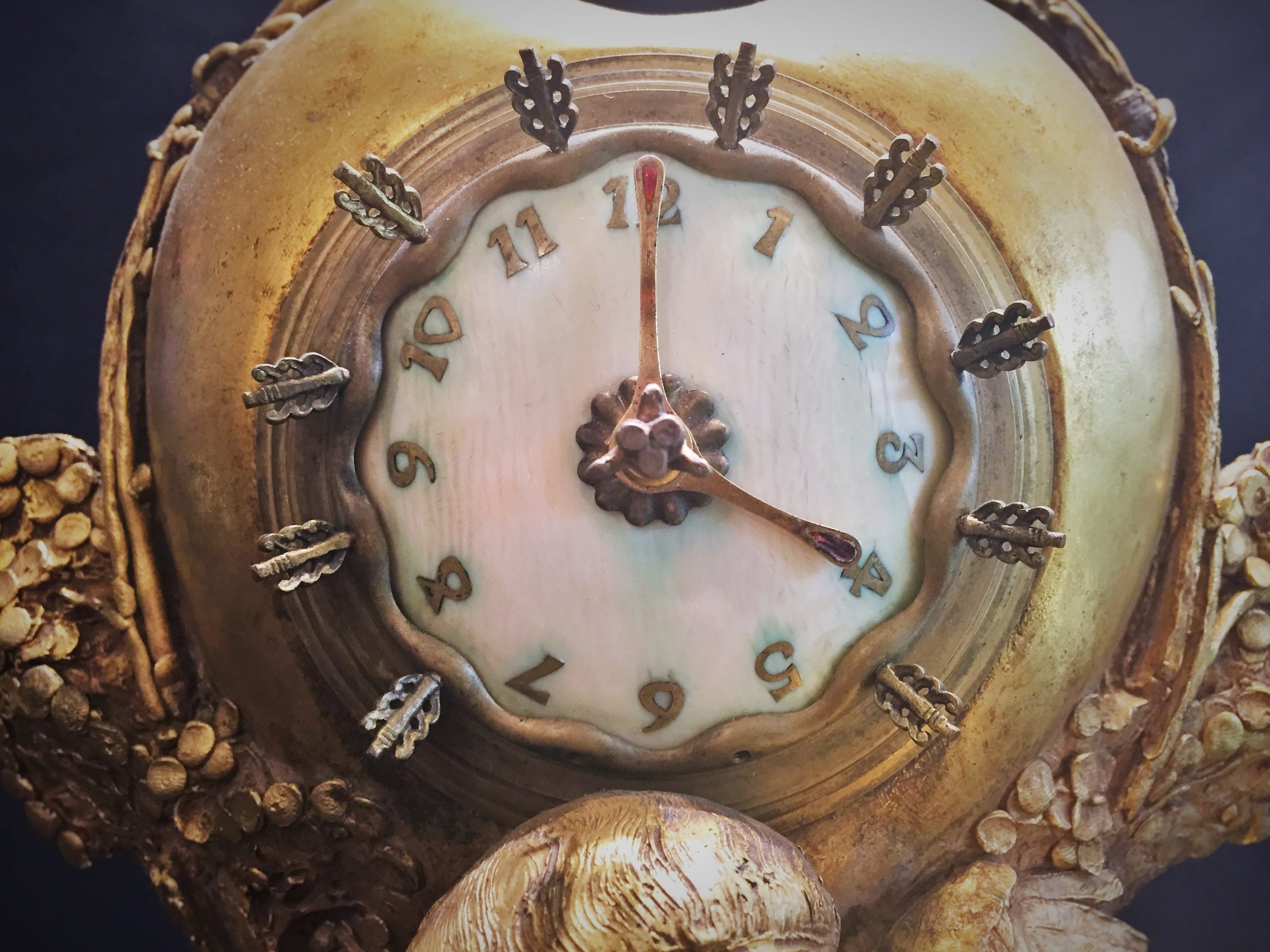
The composition is conceived as an allegory of unattainable love. At its center rises a monumental heart, richly modeled with flowing contours and adorned with delicate floral garlands, symbolizing both passion and emotional vulnerability. Set within the heart is a finely executed porcelain clock dial with elegant enamel hands, seamlessly integrating the passage of time into the sculptural narrative.
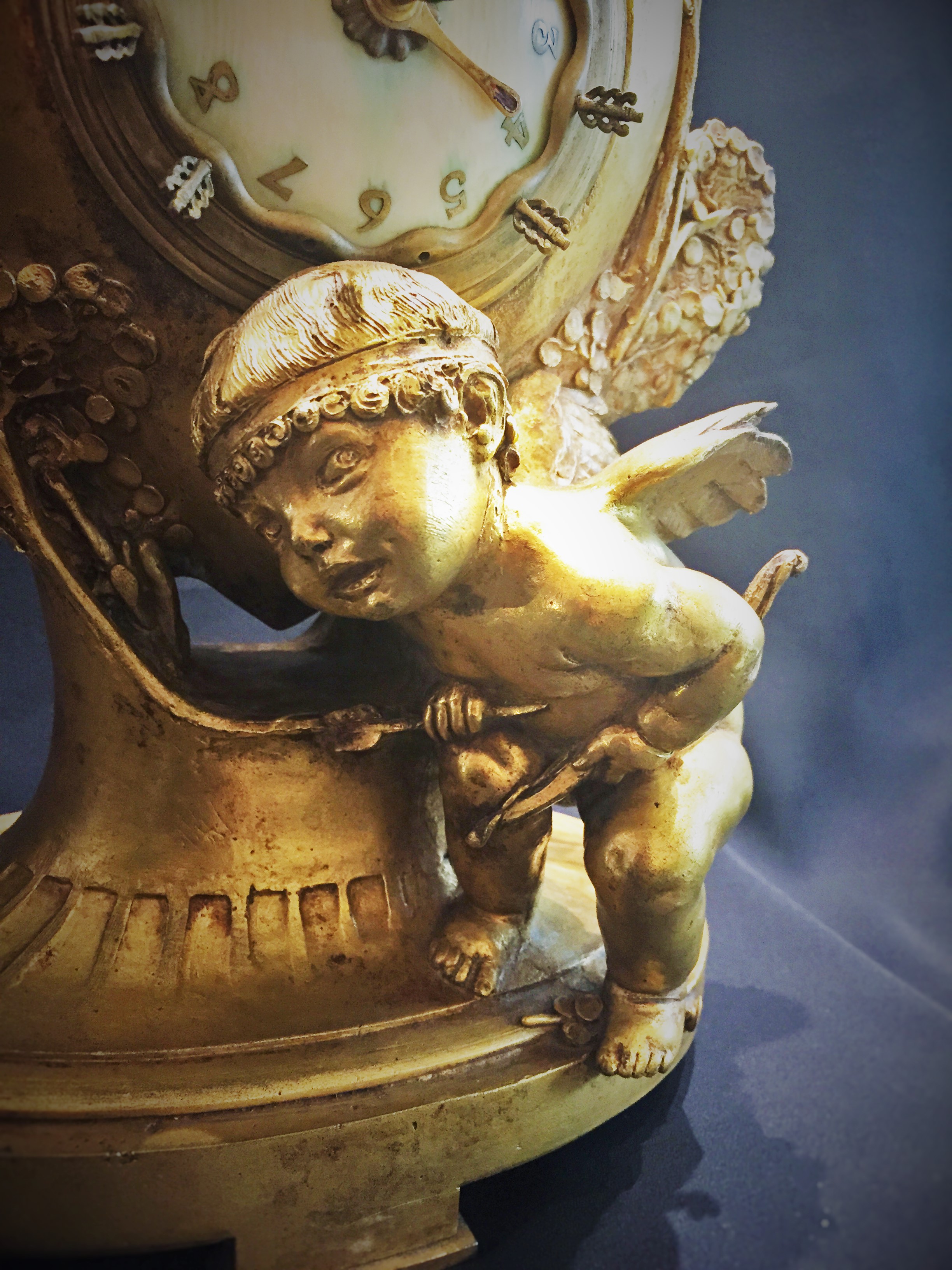
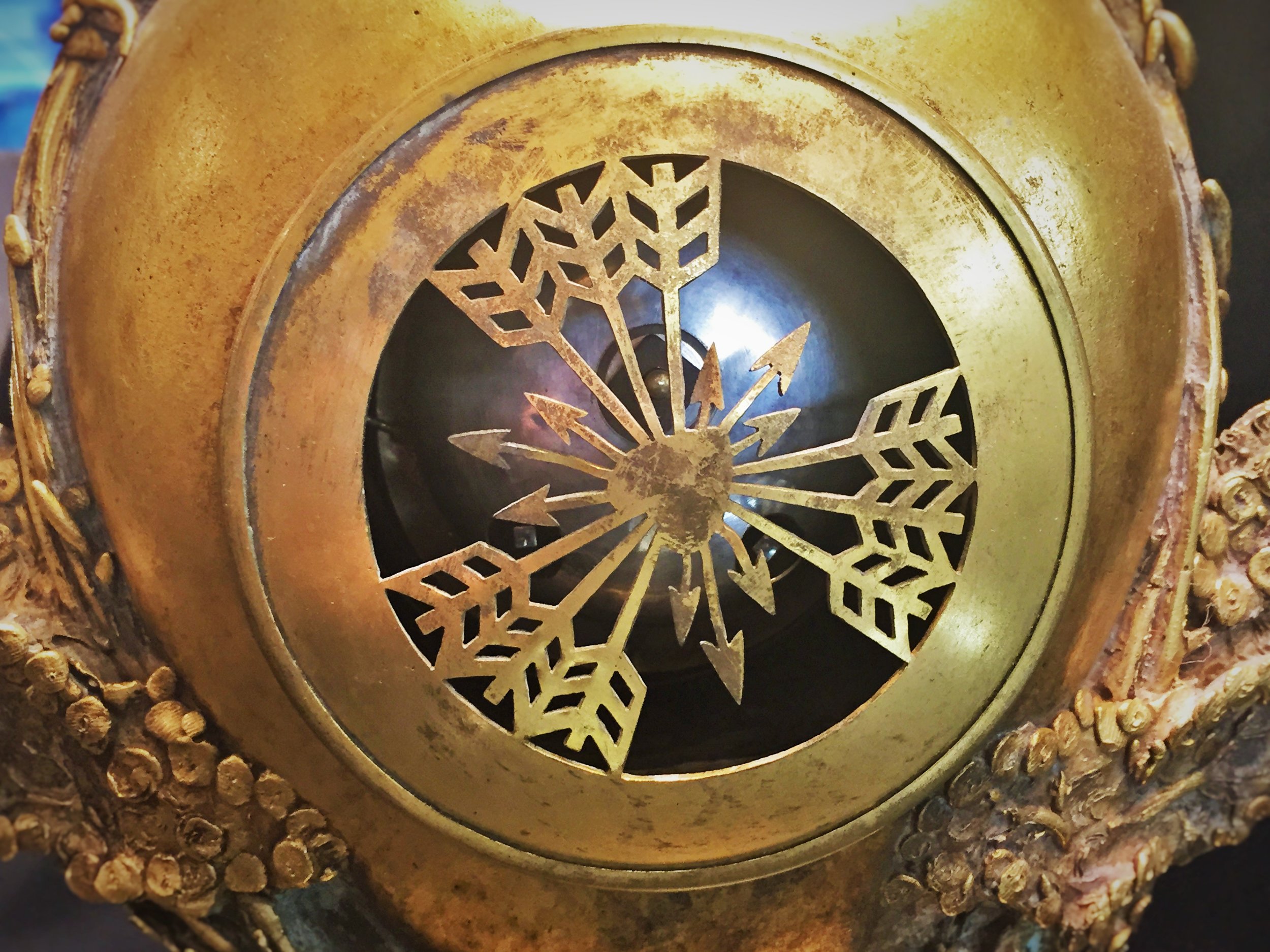
The symbolism of the work is both poetic and deeply expressive. The heart is pierced by arrows, whose shafts extend across the upper portion of the composition, suggesting Cupid's repeated but unsuccessful attempts to awaken reciprocal affection. In the foreground, a beautifully modeled young Cupid kneels in quiet contemplation, his posture conveying resignation rather than triumph. His bow rests at his side while he gently holds the broken half of an arrow, the remaining fragment lying beneath his feet—a poignant metaphor for love that has failed to reach its mark.
The reverse of the clock is equally inventive, with the movement protected by an elaborate pierced bronze cover formed by intersecting arrows, reinforcing the central allegory. Every element of Blondat's composition contributes to the narrative, inviting the viewer to reflect on the timeless themes of longing, perseverance, and the bittersweet reality of unreturned affection.
The bronze is beautifully finished in a luminous gilt patina that accentuates the richness of Blondat's sculptural modeling and the remarkable detail achieved through the lost-wax casting process. The quality of execution reflects the extraordinary standards of the Valsuani Foundry, one of France's most prestigious artistic foundries, whose clientele included Auguste Rodin, Edgar Degas, Pierre-Auguste Renoir, Aristide Maillol, Pablo Picasso, Henri Matisse, Amedeo Modigliani, Constantin Brâncuși, Alberto Giacometti, and many other masters of modern sculpture.
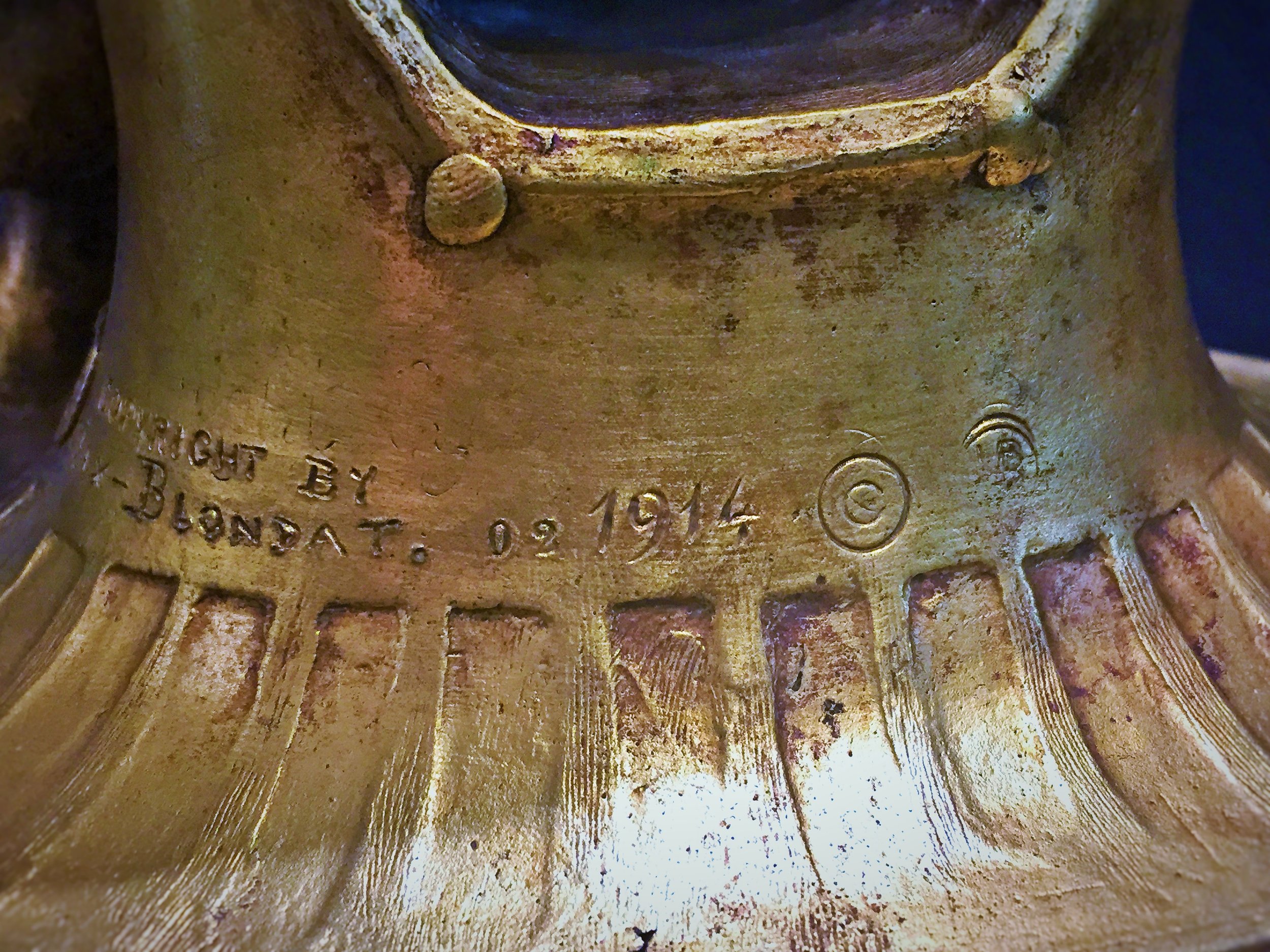
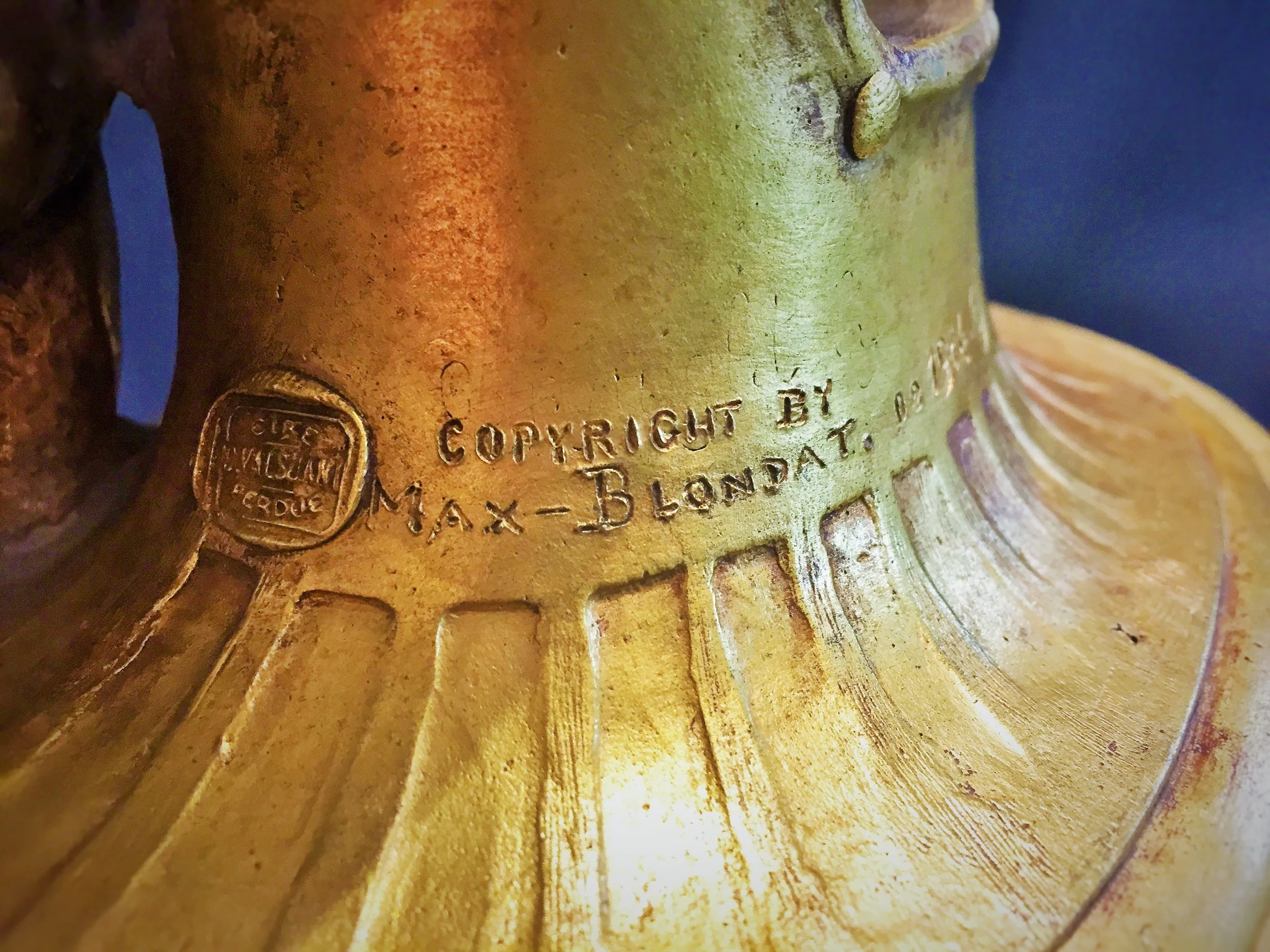
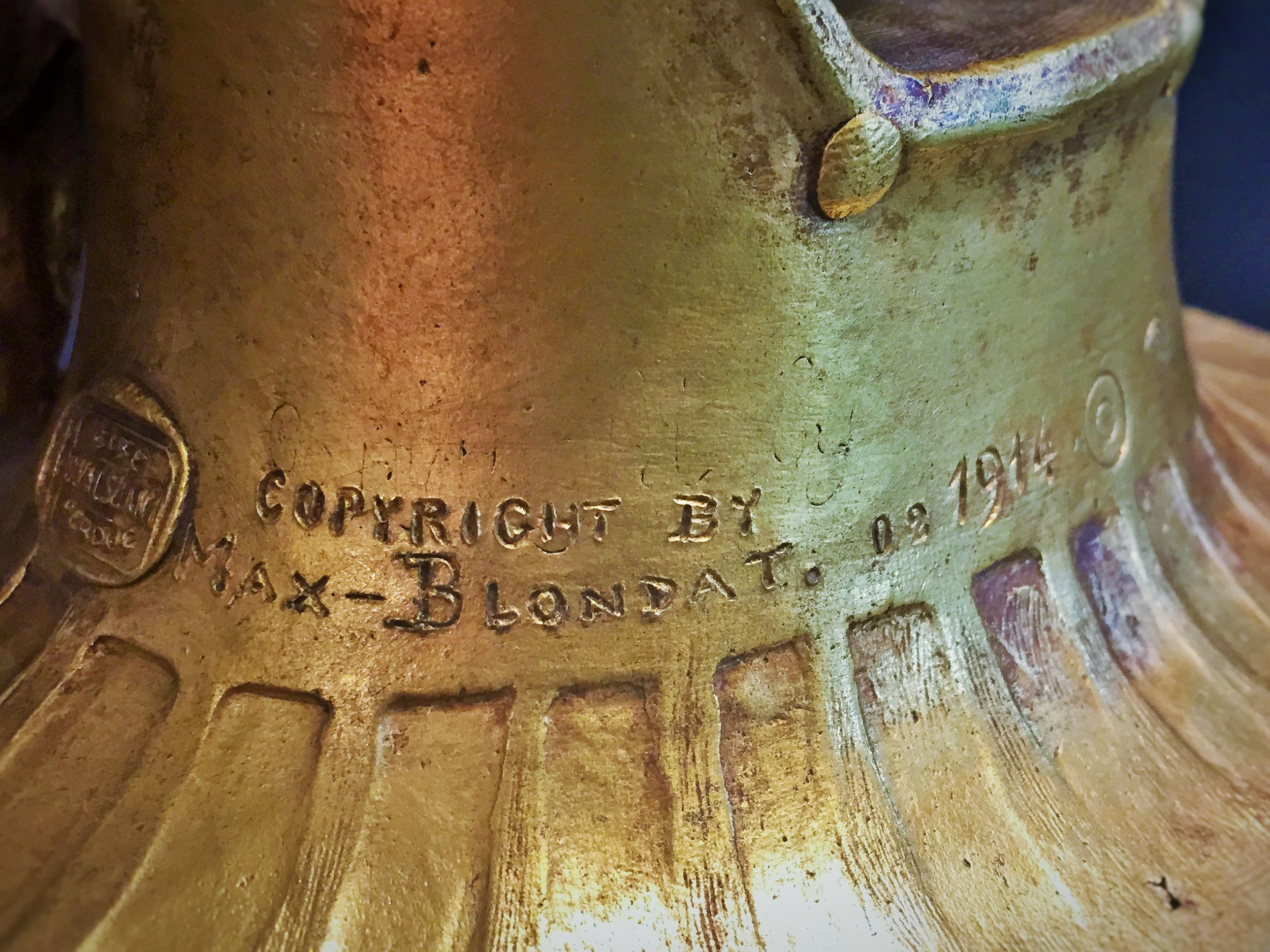
The underside bears the impressed signature "Max Blondat", the celebrated Valsuani foundry stamp reading "CIRE PERDUE", together with a copyright mark and the cast date "02.1914", confirming both its authenticity and period of production.
Max Blondat ranks among the leading figures of French Art Nouveau and early Art Deco sculpture. Best known for his celebrated Fountain of Youth, whose casts grace public spaces in France, Germany, Argentina, Switzerland, Ukraine, and the United States, Blondat excelled equally in monumental sculpture and refined decorative objects. His artistic collaborations with the Sèvres Manufactory, Edgar Brandt, Hermès, and leading French decorative arts workshops established him as one of the foremost sculptors of his generation. His works are represented in important museums and distinguished private collections worldwide.
Combining masterful sculpture, exceptional bronze casting, and a deeply evocative allegorical subject, L'Amour non partagé is among Blondat's most desirable decorative creations—a rare collector's piece equally suited to important collections of Art Nouveau sculpture, French decorative arts, or museum-quality bronze timepieces.
Dimensions
Height: 11.75 in. (29.8 cm)
Width: 8.5 in. (21.6 cm) Depth: 5 in. (12.7 cm)
Condition
Excellent antique condition, with rich original gilt patina and expected light wear consistent with age. Signed by the artist and bearing the Valsuani Cire Perdue foundry stamp, copyright mark, and cast date 02.1914.
$9,750